
Four-Step DMT Quality Control: Raw Material Screening, Decolorization, Precision Drying and COA Batch Management
High-purity DMT quality depends on raw material screening, decolorization, drying control and batch testing. Learn how Dimethyl Terephthalate suppliers stabilize purity, color, acid value and COA delivery.
TL;DR
- High-purity DMT quality depends on raw material screening, decolorization, drying control and batch testing. Learn how Dimethyl Terephthalate suppliers stabilize purity, color, acid value and COA delivery.
- Keywords: DMT quality control · high-purity DMT · Dimethyl Terephthalate purity · DMT COA report · DMT purity parameter >99.9%
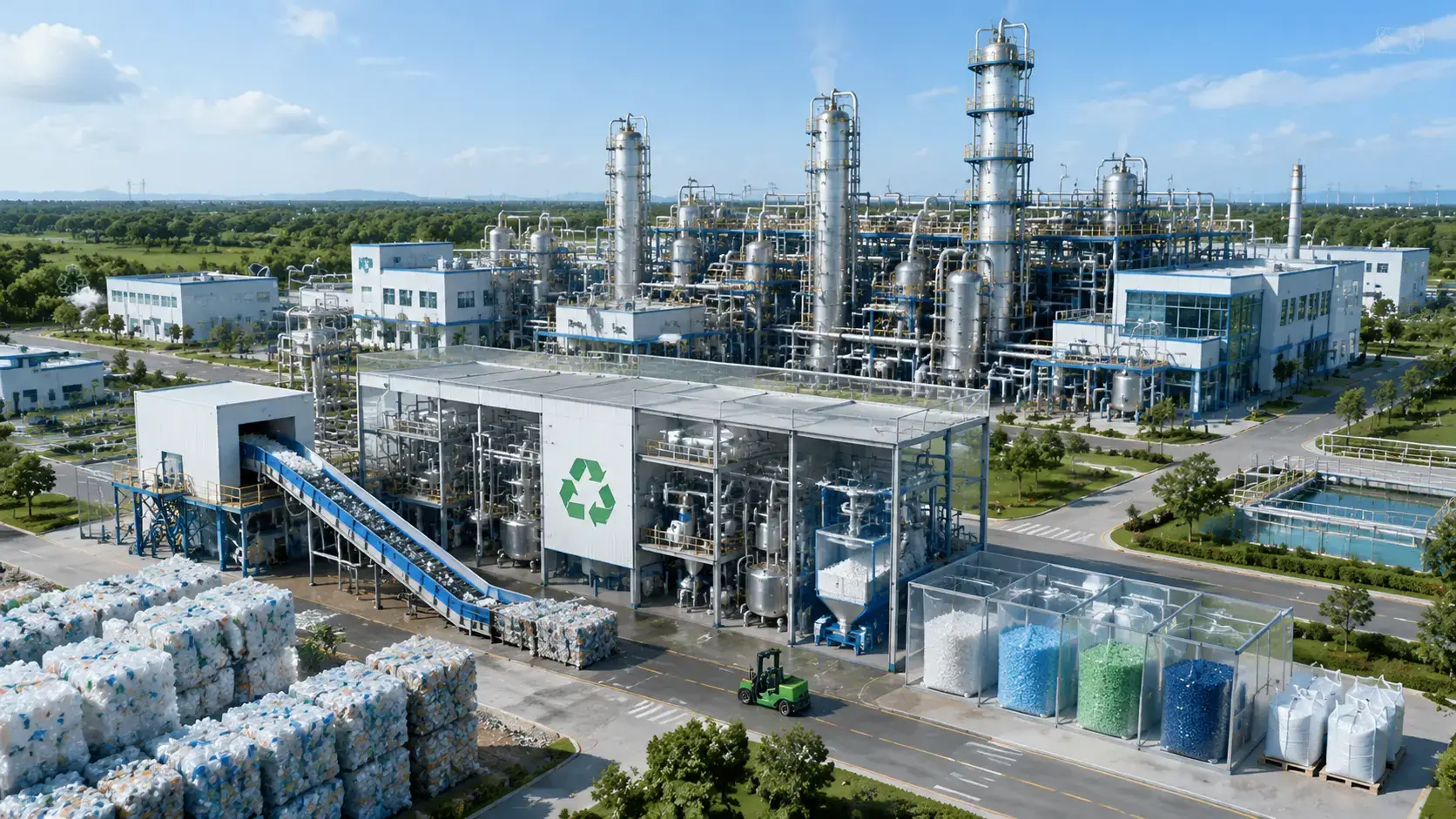
"Garbage in, garbage out" — this iron law of engineering is particularly pronounced in waste plastic chemical recycling. Even with the most advanced methanolysis reactor, if raw material pre-treatment is inadequate, impurities, color, and foreign polymer content in the final product will exceed standards. ResourceCycle has developed a systematic waste PET pre-treatment technology system through years of industrial practice.
Step 1: Fine Sorting Waste plastics come from complex sources, containing various polymers such as PVC, PE, PP, and ABS. Chlorine in PVC corrodes equipment and contaminates products during methanolysis; PE/PP remains in solid form, increasing filtration burden. ResourceCycle uses near-infrared spectroscopy (NIR) automatic sorting systems combined with manual re-sorting to improve PET purity to above 97%, effectively reducing subsequent processing loads.
Step 2: Hot Alkali Washing Sorted waste PET flakes contain labels, adhesives, inks, food residues, and other contaminants. ResourceCycle uses a three-stage hot alkali washing process (70-85°C, NaOH concentration 1-2%) with mechanical stirring and high-pressure spraying, with removal rate exceeding 99%. Washing wastewater meets discharge standards after biochemical treatment, with COD removal rate ≥95%.
Step 3: Decolorization and Impurity Removal Dyes and carbon black additives in colored PET (blue, green bottles) are the main factors affecting R-DMT color. ResourceCycle has developed a proprietary activated carbon adsorption-filtration combined decolorization process, reducing the Hazen color of the methanolysis solution from 50+ to below 10, ensuring R-DMT products reach superior grade color specifications.
Step 4: Drying and Particle Size Control The moisture content of pre-treated PET fragments needs to be reduced to below 0.02%, otherwise moisture will undergo side reactions with ester bonds during methanolysis, reducing DMT yield. ResourceCycle uses dehumidifying dryers (dew point -40°C) for precise drying, controlling fragment particle size in the 5-15mm range to optimize mass transfer efficiency.
A sound pre-treatment system is the basic guarantee for high-quality R-DMT and one of the core competencies of ResourceCycle's product quality stability.

Related articles
 01technologyOctober 18, 2025
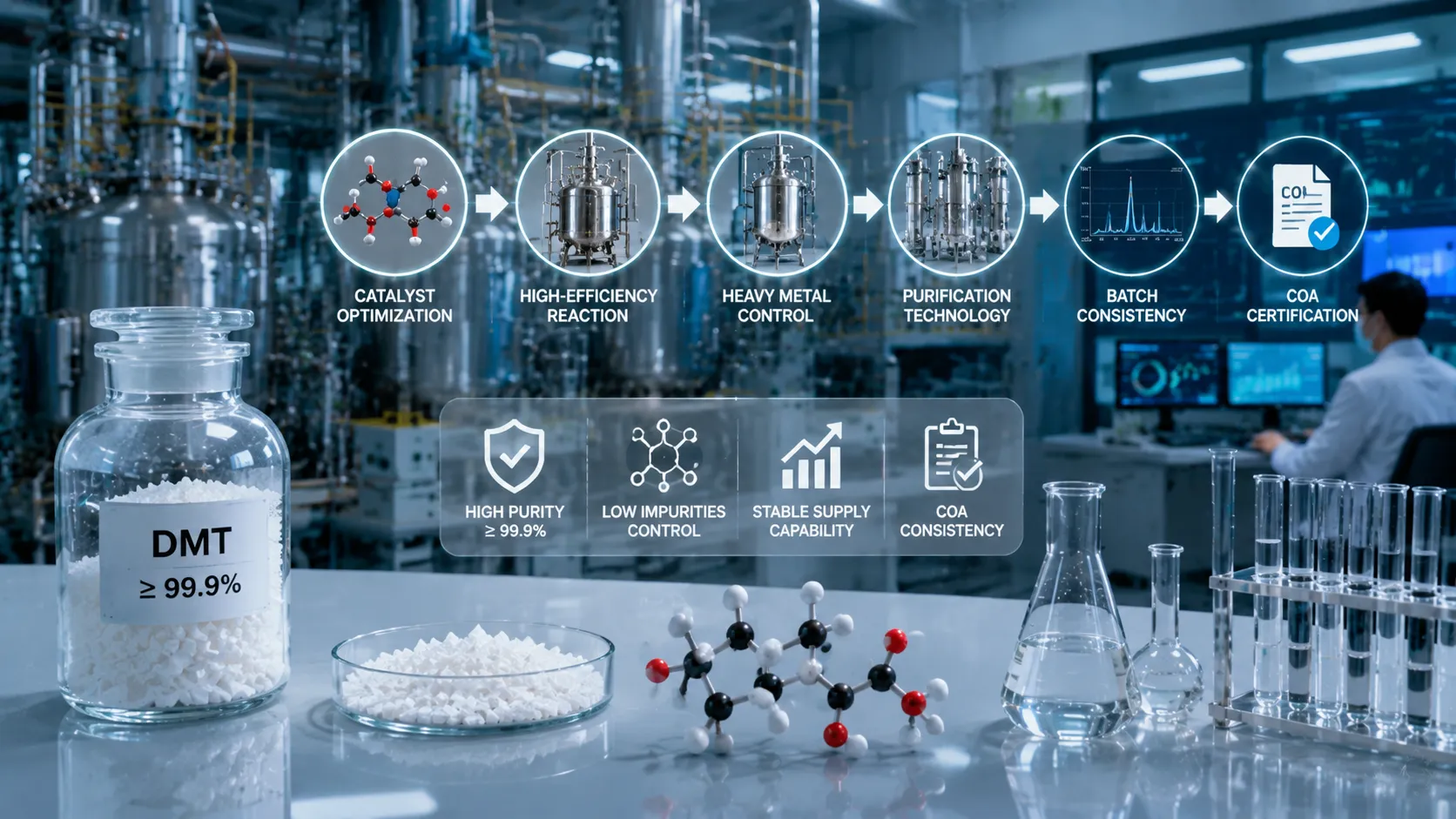
DMT Catalyst and Purification Technology: How High-Purity Dimethyl Terephthalate Is Produced at Stable Scale
This article explains catalyst systems, reaction efficiency, heavy-metal control, purification and batch stability in DMT production, showing how suppliers maintain purity ≥99.9% and consistent COA delivery.
Read more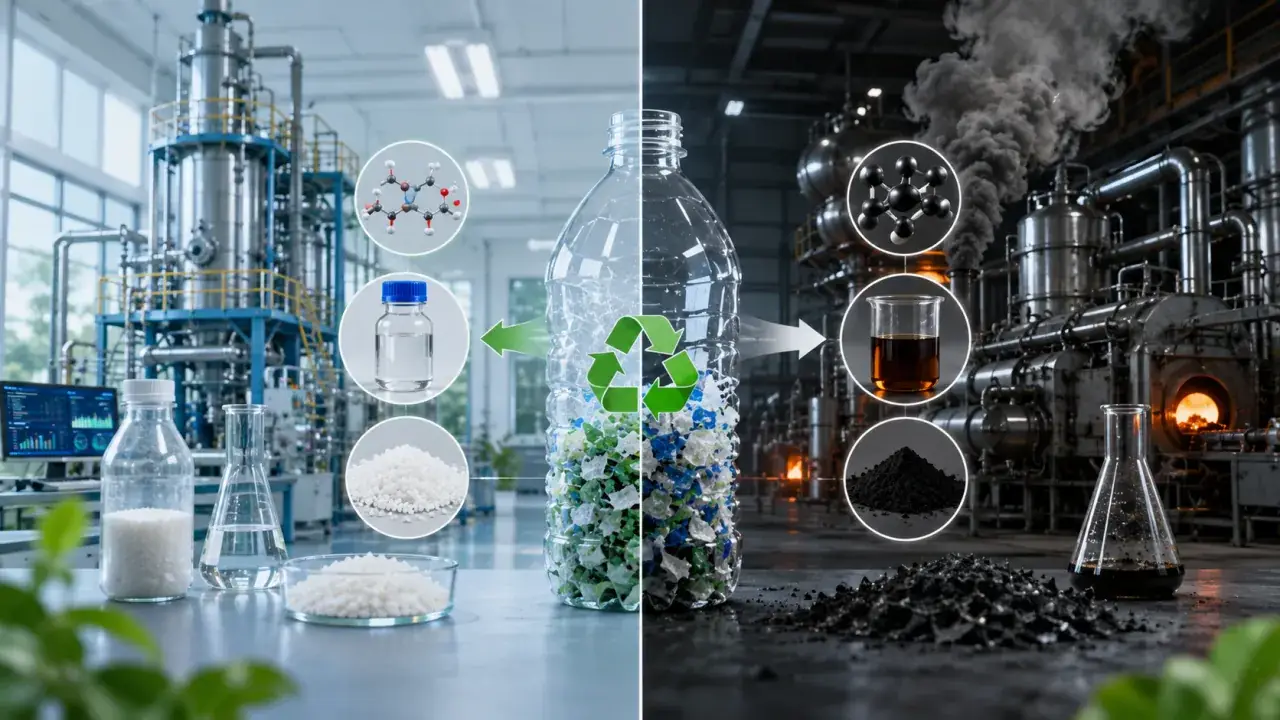 02technologyNovember 30, 2025
DMT Production Process Comparison: How Methanolysis, Esterification and Pyrolysis Routes Affect Dimethyl Terephthalate Purity
A practical comparison of DMT production routes, reaction conditions, purity, energy consumption and industrial stability, explaining why high-purity Dimethyl Terephthalate suppliers must control process quality.
Read more 03technologyMay 21, 2026
Low-Temperature Atmospheric Methanolysis of PET to Polymer-Grade DMT: ResourceCycle's New-Quality-Productivity Process Breakthrough
ResourceCycle and the Zhejiang University Green Carbon Joint Research Center have developed a disruptive process that completes PET chemical depolymerisation at 64.5 °C atmospheric reflux — achieving 99.2% PET conversion, 99.5% DMT selectivity, 99.75% product purity, 60%+ capex reduction, 45-50% energy savings, with kiloton-per-year commercial operation.
Read more