
DMT Production Process Comparison: How Methanolysis, Esterification and Pyrolysis Routes Affect Dimethyl Terephthalate Purity
A practical comparison of DMT production routes, reaction conditions, purity, energy consumption and industrial stability, explaining why high-purity Dimethyl Terephthalate suppliers must control process quality.
TL;DR
- A practical comparison of DMT production routes, reaction conditions, purity, energy consumption and industrial stability, explaining why high-purity Dimethyl Terephthalate suppliers must control process quality.
- Keywords: DMT production process · chemical DMT process · Dimethyl Terephthalate purity · high-purity DMT · DMT purity parameter >99.9%
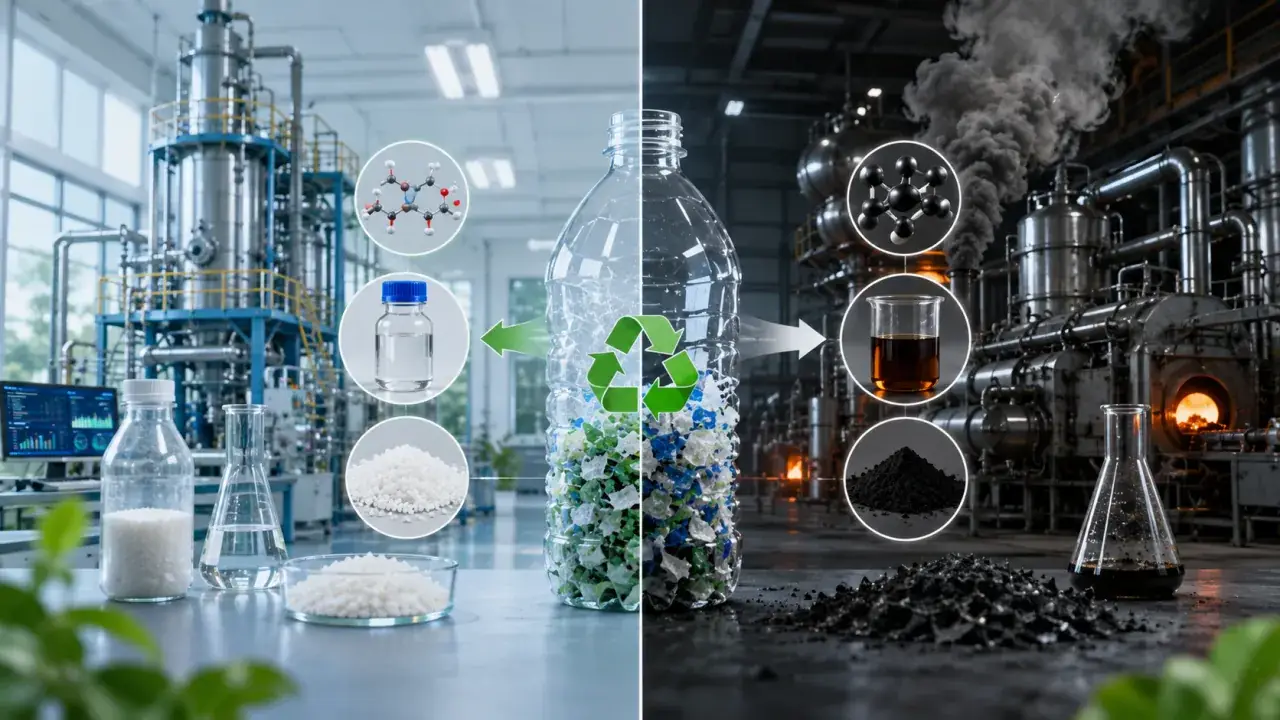
In the field of waste plastic chemical recycling, the choice of technical pathway directly determines product purity, economics, and industrial feasibility. Methanolysis (Alcoholysis) and Pyrolysis are the two most representative technical routes, each with its own advantages and disadvantages.
Methanolysis: Precision Depolymerization of Polymer Chains The core principle of methanolysis is to use alcohol solvents such as methanol and ethylene glycol under the action of catalysts (such as alkali metal salts and transition metal oxides) to break the ester bonds in PET molecular chains, depolymerizing them into monomers such as dimethyl terephthalate (DMT) or terephthalic acid (TPA) and ethylene glycol (EG). This method produces high-purity products (DMT purity can reach above 98%) that can be directly used for polyester re-polymerization, truly achieving "closed-loop" recycling. ResourceCycle's independently developed R-DMT technology is based on the methanolysis pathway, improving recovery rates to industry-leading levels through a patented catalyst system.
Pyrolysis: Wide Adaptability but Complex Products Pyrolysis converts mixed plastics into pyrolysis oil, pyrolysis gas, and carbon black through high-temperature (300-700°C) anaerobic thermal cracking. Its greatest advantage is the low requirement for feedstock, capable of processing various mixed waste plastics without sorting. However, pyrolysis products have complex compositions requiring extensive downstream distillation, product quality is less stable than methanolysis, and high-temperature operation brings higher energy consumption and equipment costs.
Comprehensive Comparison In terms of product quality, methanolysis can obtain high-purity recycled monomers that directly replace petrochemical raw materials; pyrolysis oil is mainly used as fuel or low-value chemical raw materials. From a carbon reduction perspective, methanolysis has higher carbon reduction efficiency, reducing about 2.5 tons of CO₂ equivalent emissions per ton of waste PET. In terms of industrialization maturity, methanolysis has achieved large-scale production in the polyester plastic field, with ResourceCycle's Huanggang project being a typical case.
ResourceCycle will continue to deepen the methanolysis technology route, further reducing energy consumption and improving economics through catalyst innovation and process engineering optimization, promoting high-quality development of the waste plastic chemical recycling industry.

Related articles
 01technologyOctober 18, 2025
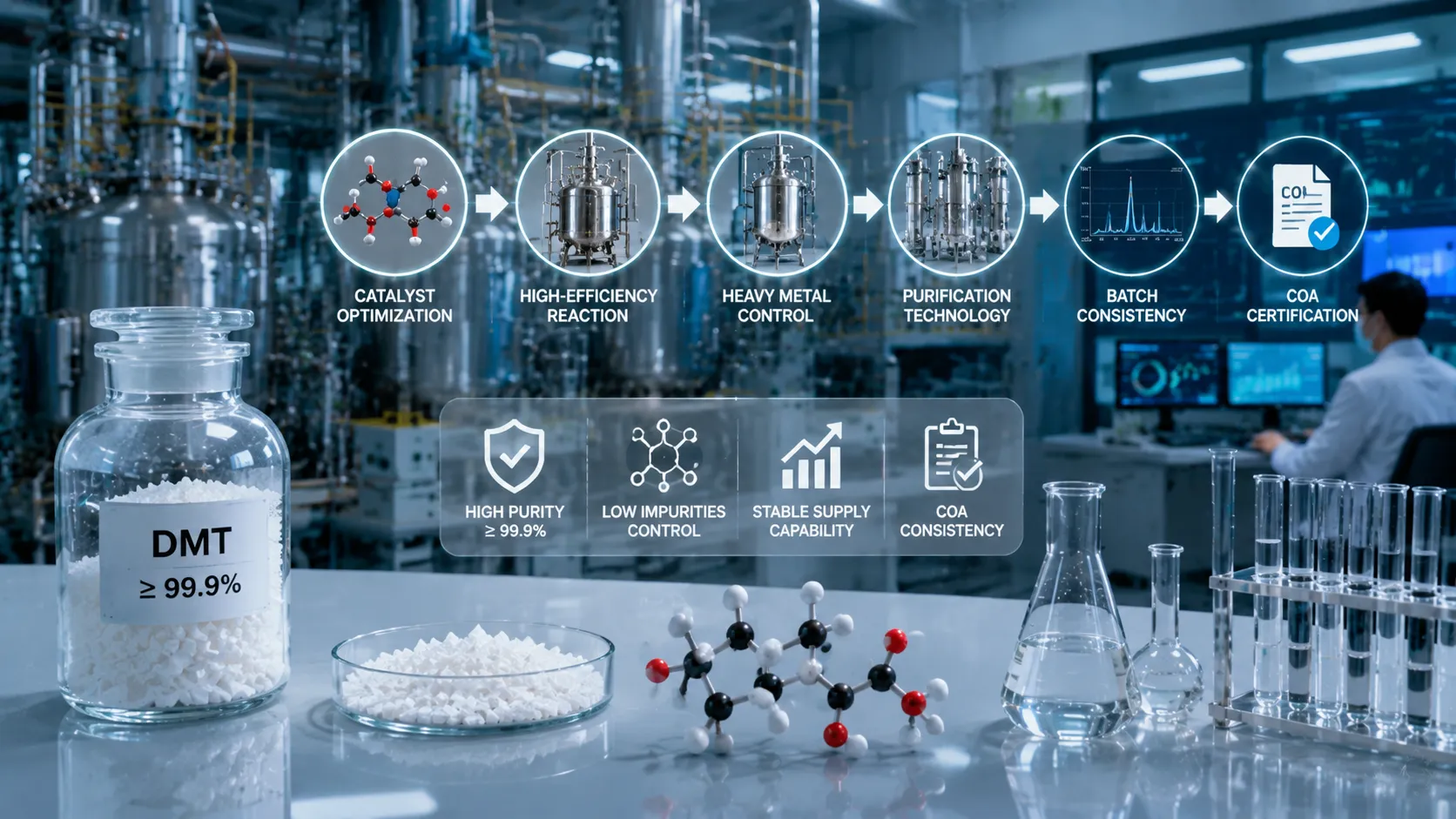
DMT Catalyst and Purification Technology: How High-Purity Dimethyl Terephthalate Is Produced at Stable Scale
This article explains catalyst systems, reaction efficiency, heavy-metal control, purification and batch stability in DMT production, showing how suppliers maintain purity ≥99.9% and consistent COA delivery.
Read more- 02technologyNovember 30, 2025
DMT Production Process Comparison: How Methanolysis, Esterification and Pyrolysis Routes Affect Dimethyl Terephthalate Purity
A practical comparison of DMT production routes, reaction conditions, purity, energy consumption and industrial stability, explaining why high-purity Dimethyl Terephthalate suppliers must control process quality.
Read more 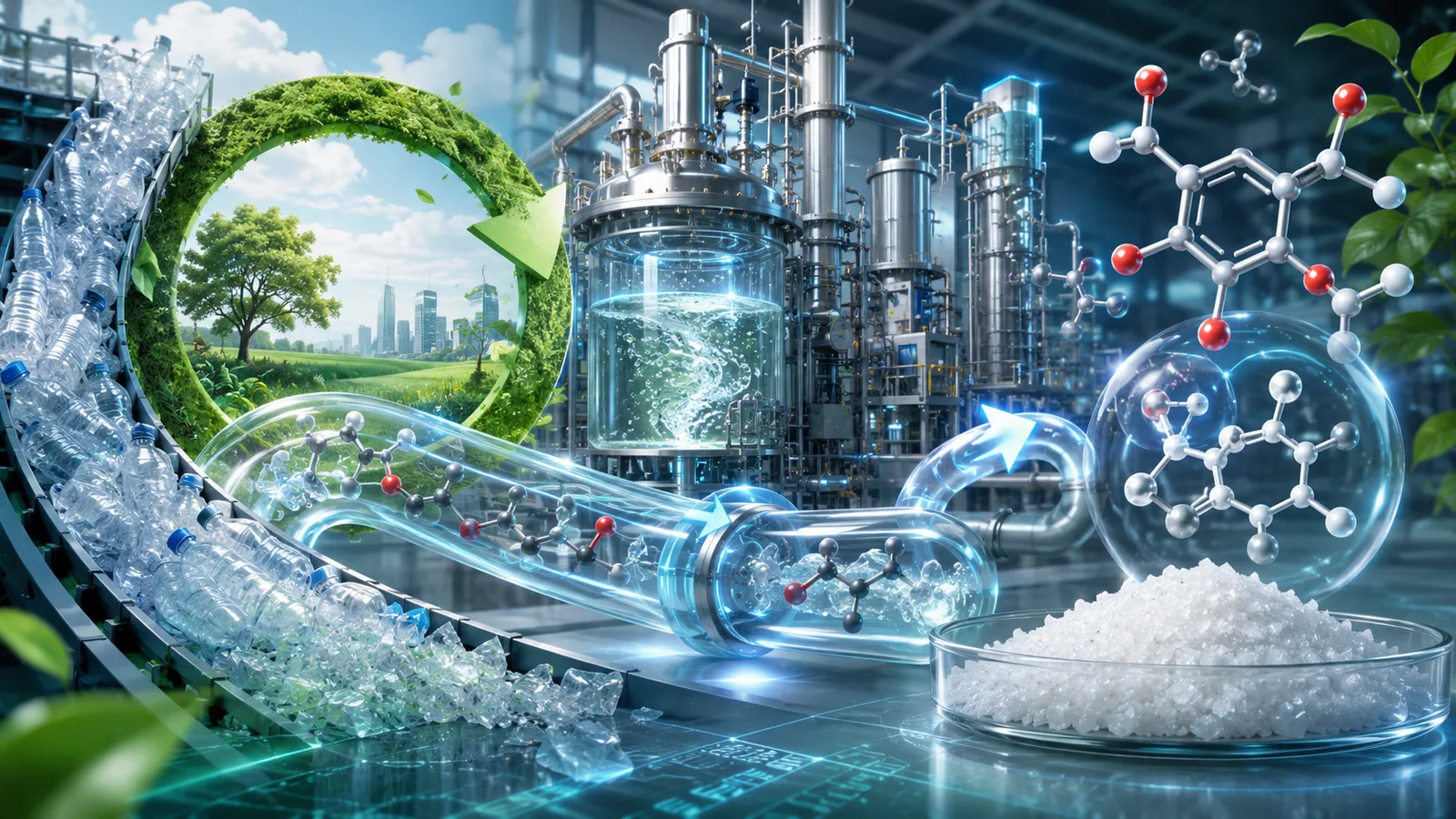 03technologyMay 21, 2026
Low-Temperature Atmospheric Methanolysis of PET to Polymer-Grade DMT: ResourceCycle's New-Quality-Productivity Process Breakthrough
ResourceCycle and the Zhejiang University Green Carbon Joint Research Center have developed a disruptive process that completes PET chemical depolymerisation at 64.5 °C atmospheric reflux — achieving 99.2% PET conversion, 99.5% DMT selectivity, 99.75% product purity, 60%+ capex reduction, 45-50% energy savings, with kiloton-per-year commercial operation.
Read more