
DMT Catalyst and Purification Technology: How High-Purity Dimethyl Terephthalate Is Produced at Stable Scale
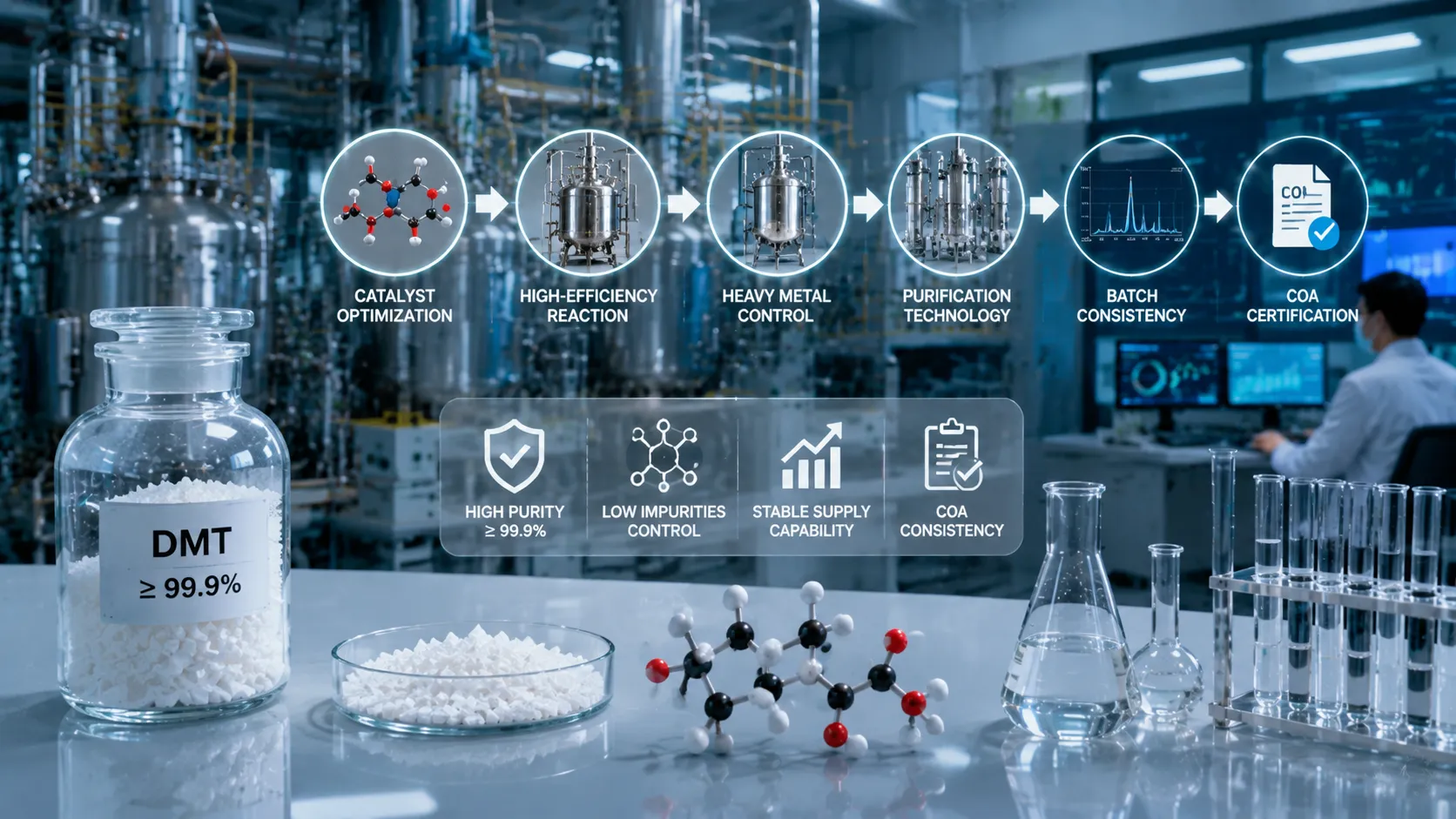
This article explains catalyst systems, reaction efficiency, heavy-metal control, purification and batch stability in DMT production, showing how suppliers maintain purity ≥99.9% and consistent COA delivery.
TL;DR
- This article explains catalyst systems, reaction efficiency, heavy-metal control, purification and batch stability in DMT production, showing how suppliers maintain purity ≥99.9% and consistent COA delivery.
- Keywords: DMT catalyst · DMT purification technology · high-purity Dimethyl Terephthalate · DMT purity parameter >99.9% · chemical DMT production process
PET methanolysis is essentially a transesterification reaction. Without catalysts, the reaction proceeds extremely slowly at the methanol reflux temperature (64.7°C), requiring tens of hours to complete. The key to industrialization lies in developing efficient, inexpensive, and easily recyclable catalyst systems.
Common Catalyst Types Alkali metal carbonates (such as Na₂CO₃, K₂CO₃) were the earliest industrially applied methanolysis catalysts, cheap but with moderate catalytic activity, requiring operation at higher temperatures (180-200°C) and pressures (0.5-1.5 MPa). Zinc salts (such as zinc acetate) have higher catalytic activity but raise concerns about heavy metal contamination, constraining their application in food-grade products. Ionic liquid catalysts have attracted academic attention in recent years, but high cost and difficulty in scaling up make industrial application immature.
ResourceCycle's Patent Catalyst System ResourceCycle's R&D team, after three years of research, developed a composite solid base catalyst (Patent No.: ZL 2023 1 XXXXXXX). This catalyst uses porous alumina as a carrier, loaded with a specific ratio of alkali metal oxides and rare earth oxide active components, with the following technical advantages:
First, high catalytic activity: At 160°C and atmospheric pressure, PET conversion rate >99.5%, DMT yield >98%, reaction time reduced to within 2 hours, more than 40% efficiency improvement over traditional catalysts.
Second, easy separation and recovery: The solid catalyst can be conveniently separated from the reaction system by filtration, avoiding the difficulty of removing liquid catalysts.
Third, recyclable: After regeneration treatment (calcination at 550°C for 2 hours), catalyst activity recovery rate ≥95%, with a single batch of catalyst recyclable more than 20 times, significantly reducing operating costs.
Fourth, zero heavy metal detection: Zinc, lead, and other heavy metals in the final R-DMT product are below detection limits, meeting strict food contact material requirements.
This patent catalyst system is an important component of ResourceCycle's core competitiveness, with PCT international patent applications filed and licensing cooperation being advanced to European and American markets.

Related articles
- 01technologyOctober 18, 2025
DMT Catalyst and Purification Technology: How High-Purity Dimethyl Terephthalate Is Produced at Stable Scale
This article explains catalyst systems, reaction efficiency, heavy-metal control, purification and batch stability in DMT production, showing how suppliers maintain purity ≥99.9% and consistent COA delivery.
Read more 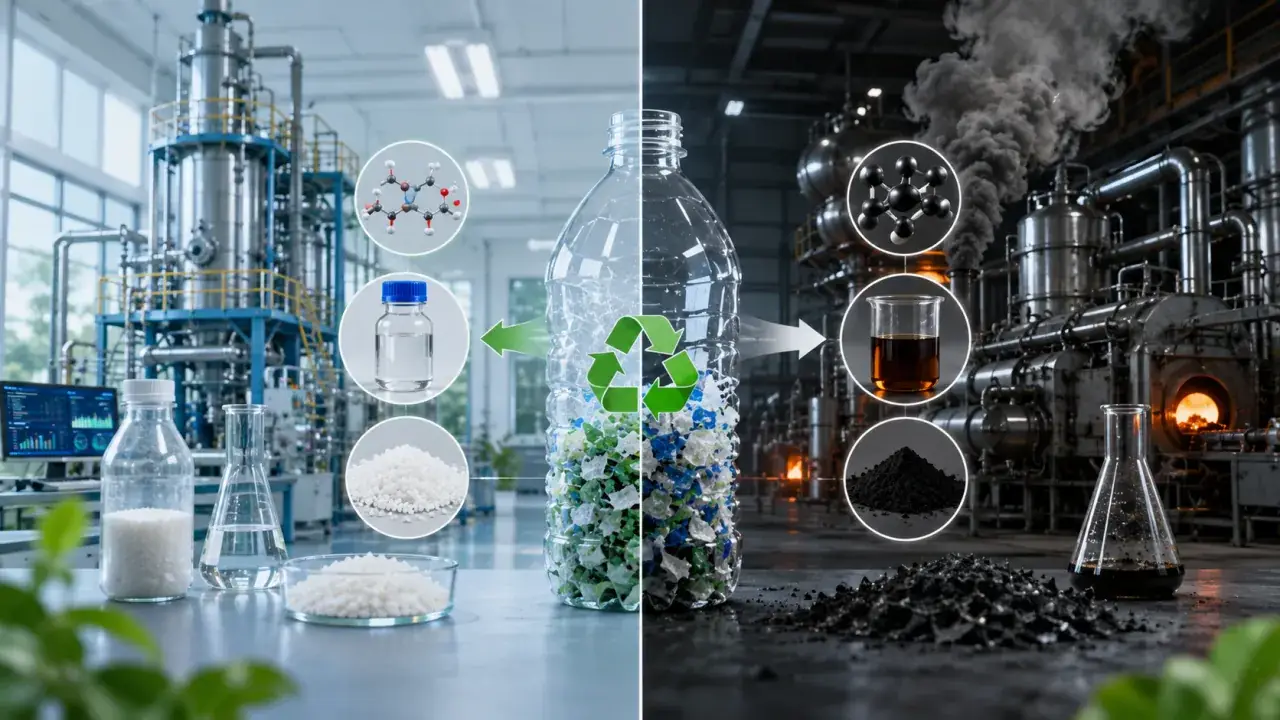 02technologyNovember 30, 2025
DMT Production Process Comparison: How Methanolysis, Esterification and Pyrolysis Routes Affect Dimethyl Terephthalate Purity
A practical comparison of DMT production routes, reaction conditions, purity, energy consumption and industrial stability, explaining why high-purity Dimethyl Terephthalate suppliers must control process quality.
Read more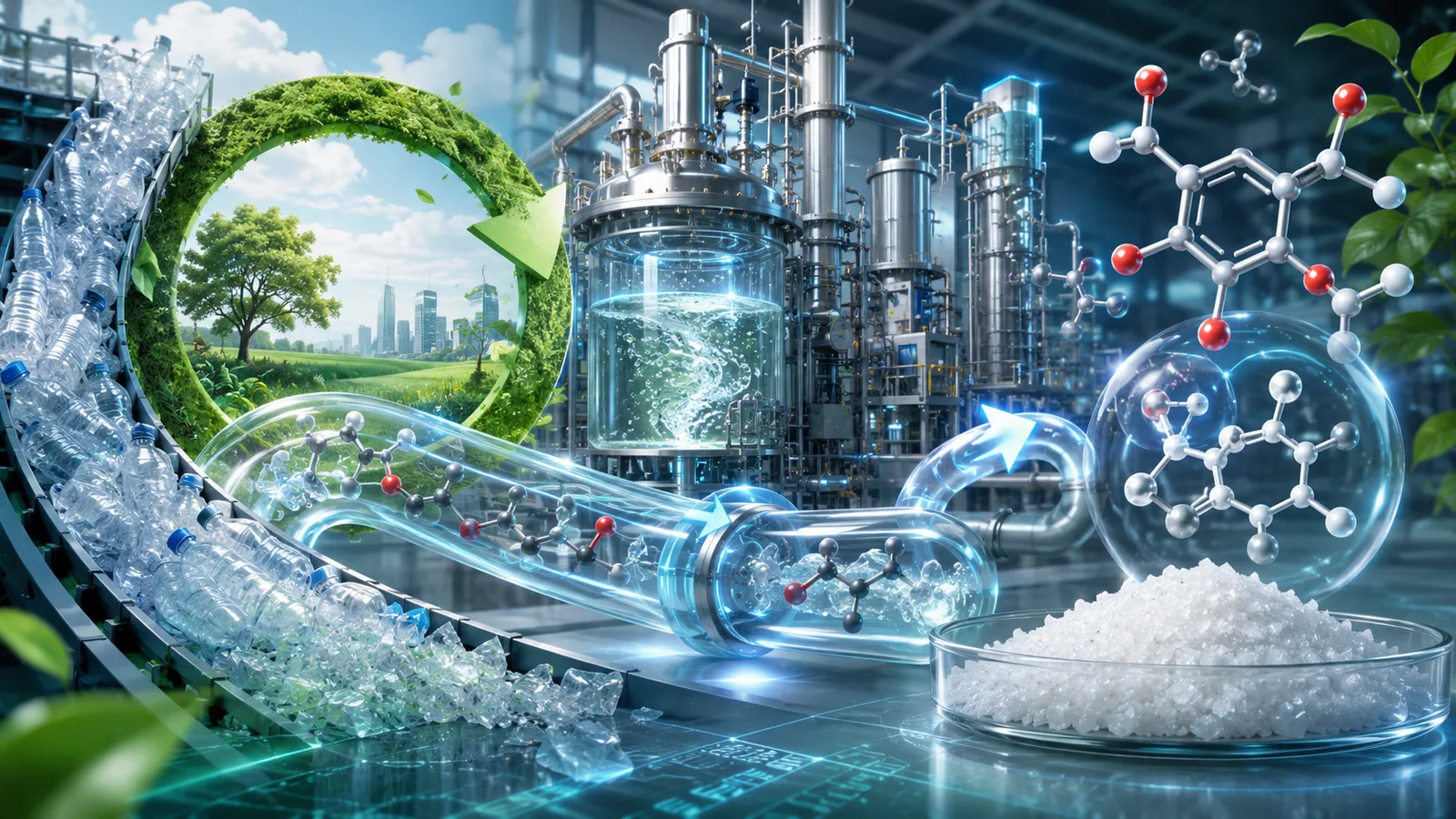 03technologyMay 21, 2026
Low-Temperature Atmospheric Methanolysis of PET to Polymer-Grade DMT: ResourceCycle's New-Quality-Productivity Process Breakthrough
ResourceCycle and the Zhejiang University Green Carbon Joint Research Center have developed a disruptive process that completes PET chemical depolymerisation at 64.5 °C atmospheric reflux — achieving 99.2% PET conversion, 99.5% DMT selectivity, 99.75% product purity, 60%+ capex reduction, 45-50% energy savings, with kiloton-per-year commercial operation.
Read more