
Low-Temperature Atmospheric Methanolysis of PET to Polymer-Grade DMT: ResourceCycle's New-Quality-Productivity Process Breakthrough
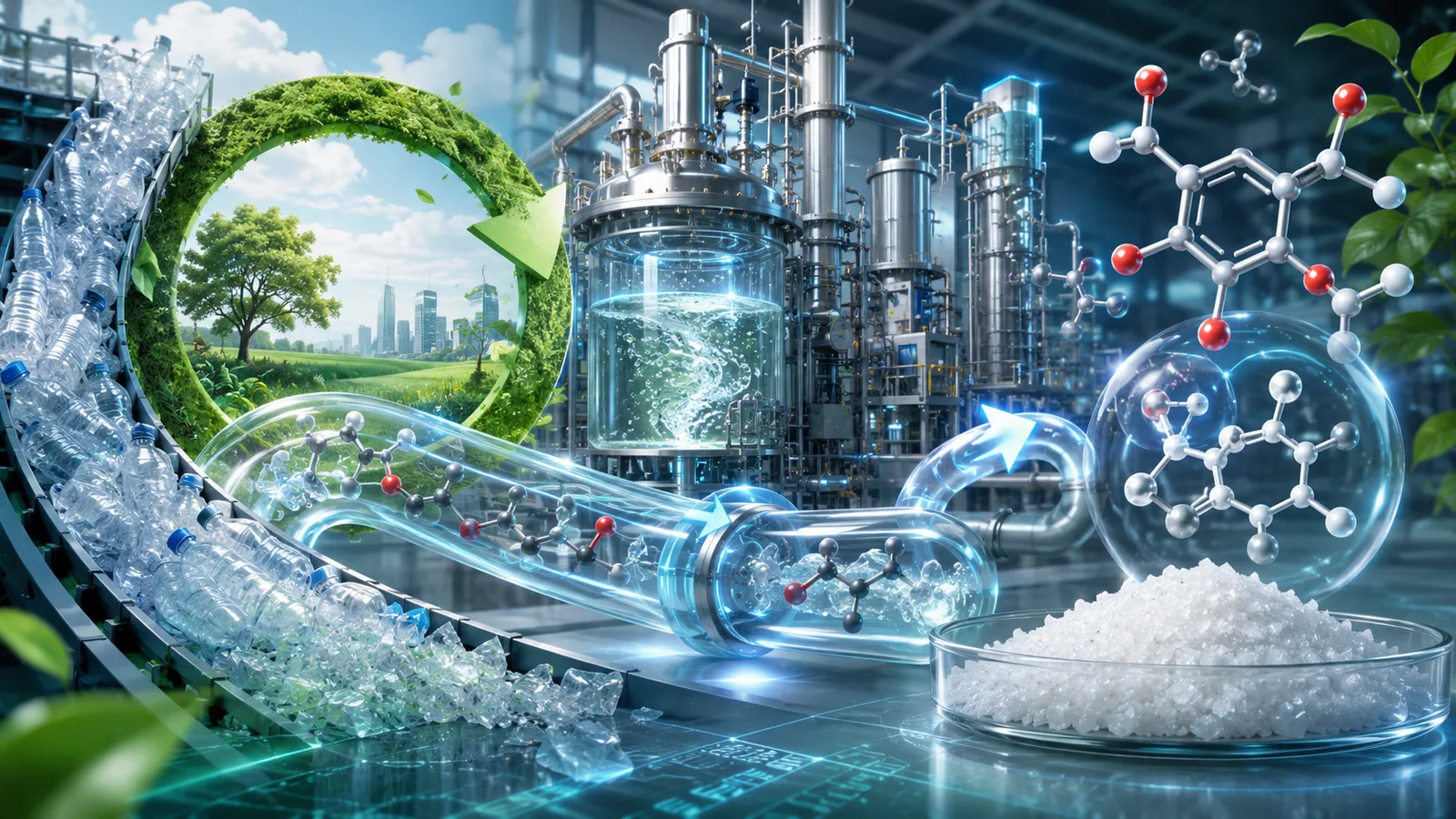
ResourceCycle and the Zhejiang University Green Carbon Joint Research Center have developed a disruptive process that completes PET chemical depolymerisation at 64.5 °C atmospheric reflux — achieving 99.2% PET conversion, 99.5% DMT selectivity, 99.75% product purity, 60%+ capex reduction, 45-50% energy savings, with kiloton-per-year commercial operation.
TL;DR
- ResourceCycle and the Zhejiang University Green Carbon Joint Research Center have developed a low-temperature atmospheric (64.5 °C / 0.1 MPa) chemical recycling process, overcoming the industry pain point of traditional methanolysis requiring 200-300 °C / 2-8 MPa supercritical conditions.
- Key process metrics: PET conversion 99.2% · DMT selectivity 99.5% · reaction time 2.5 h · product purity 99.75% · acid value 0.02 mg KOH/g · color 10 Pt-Co.
- Core innovations: strong base + functionalised ionic liquid hybrid catalyst system, plus co-solvent swelling technology — lowering activation barriers from both thermodynamic and mass-transfer dimensions.
- Economic and environmental benefits: 60%+ capex reduction on core reaction unit, 45-50% reaction energy savings, 99.2% co-solvent recovery, zero wastewater and waste residue discharge.
- Keywords: Low-temperature methanolysis PET · Polymer-grade DMT · Ionic liquid catalysis · Co-solvent swelling · New quality productivity.
Introduction: The High-T/High-P Bottleneck of PET Chemical Recycling
Polyethylene Terephthalate (PET) is an engineering plastic with vast applications in packaging, textiles and electronics. The accumulating waste polyester places heavy burden on the ecosystem. Among existing recycling routes, methanolysis can completely depolymerise PET into Dimethyl Terephthalate (DMT) and Ethylene Glycol (EG); the refined products feed directly into virgin-grade polyester synthesis — the key path to truly closed-loop circular polyester.
However, traditional methanolysis typically operates at 200-300 °C and 2-8 MPa in supercritical or near-supercritical conditions. These harsh conditions demand specialised high-pressure / corrosion-resistant equipment, with prohibitively high energy consumption, severely constraining industrial scale-up. ResourceCycle (Hangzhou) New Materials Co., Ltd., focused on low-carbon new materials, has independently developed a disruptive low-temperature atmospheric chemical recycling process — the core "new quality productivity" enabler driving China's circular economy and carbon neutrality goals.
Core Reaction Equation
PET methanolysis is essentially a transesterification process. Under catalysis, methanol nucleophilically attacks the ester carbon of the PET chain, breaking C-O bonds and progressively forming DMT and EG:
(−CO−C₆H₄−CO−O−CH₂CH₂−O−)ₙ + 2n CH₃OH → n CH₃OOC−C₆H₄−COOCH₃ + n HO−CH₂CH₂−OH
1. Two Technical Bottlenecks Under Low-T Atmospheric Conditions
Under low-T atmospheric conditions, PET methanolysis faces two core challenges:
- Thermodynamic low activity: at reduced temperature, methanol molecules lose thermal kinetic energy and struggle to overcome the activation barrier for nucleophilic ester attack.
- Mass-transfer resistance at phase interface: waste PET does not dissolve in low-T methanol, forming a heterogeneous solid-liquid reaction. PET crystalline regions block methanol penetration into the polymer, severely slowing reaction rate.
Leveraging the Green Carbon Joint Research Center co-built with Zhejiang University, the ResourceCycle R&D team pursued industry-academia synergy at its 10,000+ m² industrial R&D and pilot base in Hangzhou. Through over a thousand de-bottlenecking experiments, the team combined a "high-efficiency hybrid catalyst system" with a "low-toxicity highly-compatible solvent additive" to achieve rapid, complete PET depolymerisation under mild 60-65 °C reflux conditions.
1. Strong Base + Functionalised Ionic Liquid Hybrid Catalyst
Standalone inorganic bases lack low-T activity, while ordinary ionic liquids are prohibitively expensive. The Green Carbon Joint Research Center developed a unique hybrid catalyst combining a strong base with a functionalised ionic liquid. The ionic liquid cation forms strong hydrogen bonds with the carbonyl oxygen of the PET ester group, significantly amplifying the electrophilicity of the carbonyl carbon — drastically lowering the activation energy for methanol nucleophilic attack, enabling low-T depolymerisation.
2. Co-Solvent Swelling Technology
A low-toxicity, high-boiling, methanol-miscible green co-solvent is introduced. It rapidly disrupts hydrogen bonds and van der Waals forces between waste polyester chains, causing the insoluble solid PET to swell significantly and even partially dissolve, opening up the tight crystalline structure. Catalyst and methanol can then rapidly penetrate the polymer chain interior, expanding mass-transfer area severalfold — resolving the heterogeneous mass-transfer industry challenge.
2. Four-Unit Process Flow & Kiloton/Year Commercial Plant
The process comprises four core units: feedstock pretreatment, swelling depolymerisation reaction, crystallisation separation, distillation recovery. The process is currently in stable operation at ResourceCycle's Huangzhou and Hangzhou pilot bases, with kiloton-per-year commercial-scale plant achieved.
1. Feedstock Pretreatment Unit
Waste PET bottle flake, coloured plastic or textile waste is mechanically shredded into powder or flake of 0.5-2.0 mm particle size. Warm water and surfactant washing removes surface label adhesive, organic pollutants and dust, followed by drying at 100 °C to ≤0.1 wt% moisture content. Strict moisture control fully suppresses terephthalic acid (TPA) byproduct formation, securing DMT selectivity at source.
2. Low-Temperature Atmospheric Depolymerisation Unit
In the ResourceCycle proprietary atmospheric depolymerisation reactor, washed and dried polyester waste, industrial methanol, co-solvent and hybrid catalyst are charged in proportion.
- Typical material ratio (mass): PET : methanol : co-solvent = 1 : 4 : 2.
- Hybrid catalyst loading: 3%-5% of PET mass.
- Agitation: 300-500 rpm to eliminate macroscopic mass-transfer resistance.
- Reaction temperature: heated to 64.5 °C (methanol atmospheric boiling point) maintaining gentle reflux.
- Reaction pressure: atmospheric (0.1 MPa).
- Reaction time: 2.0-4.0 h. Solid PET powder gradually shrinks and finally disappears, system clears into clear liquid.
3. Crystallisation & Separation Unit
Post-reaction, hot coarse filtration (~60 °C) intercepts heterogeneous impurities. The clear filtrate is progressively cooled to 10-15 °C. As DMT solubility is extremely low in low-T methanol + co-solvent, large quantities of white needle-shaped DMT crystals precipitate rapidly. The slurry is centrifuged for solid-liquid separation, yielding crude DMT cake. The cake is washed with cold methanol, redissolved in 75 °C hot methanol for recrystallisation, then centrifuged and dried to give high-purity DMT solid product.
4. Distillation Recovery Unit
The post-DMT-separation filtrate contains methanol, EG, co-solvent and dissolved catalyst. A two-stage distillation tower atmospherically separates methanol for reactor recycle; vacuum distillation sequentially separates EG byproduct and co-solvent, while the high-concentration catalyst residue at the column base is recycled directly.
3. Key Process Parameters & Synergistic Optimisation
1. Effect of Reaction Temperature
Under atmospheric pressure, reaction temperature is bounded by methanol's boiling point. ResourceCycle's measured temperature-conversion relationship:
- 45 °C: PET conversion 32.5%, DMT selectivity 98.1%, reaction time 6.0 h.
- 55 °C: PET conversion 68.4%, DMT selectivity 98.5%, reaction time 4.0 h.
- 65 °C (reflux): PET conversion 99.2%, DMT selectivity 99.5%, reaction time 2.5 h.
Maintaining 64.5-65 °C, the system spontaneously holds temperature constant via methanol reflux latent heat, avoiding side reactions from local overheating, and achieves maximum reaction rate and conversion at atmospheric pressure.
2. Catalyst Concentration Regulating Depolymerisation Depth
Hybrid catalyst loading below 1.5% cannot fully clear the system within 4 h. At 3.5% loading, reaction rate saturates. Further increases neither shorten reaction time meaningfully nor avoid increased washing solvent consumption.
3. Moisture Content & Deep Interference on Product Purity
Methanolysis is extremely sensitive to system moisture. Excess water from inadequate pretreatment triggers competitive hydrolysis, producing methanol-insoluble TPA — driving acidic impurities into product. Comparative experiments show: raising system moisture from 0.05% to 0.5% raises final DMT product acid value nearly one order of magnitude. Strict dry-state control is the prerequisite to polymer-grade DMT purity.
4. Polymer-Grade DMT Product Quality Metrics
DMT product from continuous stable operation at the kiloton-scale commercial plant fully meets "polymer-grade" standards for synthetic polymer feedstock. Typical measured data:
- Appearance: white crystalline solid or powder, no mechanical impurities (microscopic visual inspection — pass).
- DMT content: measured 99.75% (spec ≥99.50%, gas chromatography).
- Melting point: measured 140.6 °C (spec 140.0-142.0 °C, micro-MP apparatus).
- Acid value: measured 0.02 mg KOH/g (spec ≤0.05, acid-base titration).
- Ash content: measured 0.001% (spec ≤0.005%, high-T ignition gravimetry).
- Color: measured 10 Pt-Co (spec ≤15, platinum-cobalt colorimetry).
GC analysis shows the major impurity is trace monomethyl terephthalate (MMT); no TPA or other high-boiling carbonised byproducts detected — confirming the exceptional selectivity and stability of the low-T atmospheric route.
5. Cross-Generational Economic & Carbon Advantages
1. Major Capex Reduction
With reaction at atmospheric pressure (0.1 MPa) and below 70 °C, the reactor avoids expensive high-pressure alloy steels — standard stainless steel is fully sufficient. Core reaction unit fixed asset capex drops by 60%+, enabling rapid large-scale industrial replication.
2. Deep Energy Optimisation & Low-Carbon Footprint
Traditional supercritical methanolysis requires heating the entire system to 250 °C+ and maintaining high pressure — electric or thermal-oil systems consume massive energy. ResourceCycle's process holds temperature at ~65 °C, leveraging plant low-grade waste heat or low-pressure steam. Per ton of waste PET processed, the reaction-stage energy savings reach 45-50%, with significant low-carbon emission reduction.
3. Closed-Loop Clean Production
The co-solvent is low-toxicity and low-volatility, with 99.2% recovery in the closed-loop distillation system. Zero wastewater and waste residue discharge throughout the process — perfectly aligned with circular economy and life-cycle clean production requirements.
6. Industrial Significance & Outlook
ResourceCycle (Hangzhou) New Materials Co., Ltd., founded August 2024 and rooted in Lin'an District of Hangzhou, has rapidly emerged in the low-carbon new materials track through pioneering spirit. The Green Carbon Joint Research Center with Zhejiang University has successfully translated the "low-T atmospheric methanolysis PET to DMT" disruptive original technology from laboratory to industrialisation.
The 10,000+ m² industrial R&D and pilot base plus stable kiloton-per-year commercial plant operation mark a solid foundation for large-scale industrialisation. As a "new quality productivity" benchmark enterprise, ResourceCycle is actively driving global waste plastic circular economy development. The company will further scale up production, extend diversified waste plastic recycling chains, and contribute outstanding technology to global green low-carbon goals.
About ResourceCycle
Hangzhou Ruisaike New Materials Co., Ltd. (ResourceCycle) was founded in 2024, headquartered in Lin'an District, Hangzhou, Zhejiang, with production base in Huanggang, Hubei. The company focuses on chemical recycling of polyester monomers, producing high-purity Dimethyl Terephthalate (DMT, CAS 120-61-6) and Ethylene Glycol (EG / MEG, CAS 107-21-1) via proprietary low-temperature atmospheric methanolysis process, with annual capacity of 5,000 t DMT + 1,600 t EG. The company holds ISO 9001, ISO 14001, ISO 14067 PCF, ISCC PLUS certifications, co-builds the Green Carbon Joint Research Center with Zhejiang University, and has 12 granted core invention patents.
Read More
- Core Technology: GREEN CIRCLE Methanolysis Process
- Dimethyl Terephthalate (DMT) Product — CAS 120-61-6
- Ethylene Glycol (EG / MEG) Product — CAS 107-21-1
- DMT vs PTA Route Selection Guide
- ISCC PLUS Mass Balance Explained
- Glossary: Methanolysis Process
- Glossary: Transesterification Catalyst
- Certifications
- Contact Sales: DMT Sample / Quote / COA

Related articles
 01technologyOctober 18, 2025
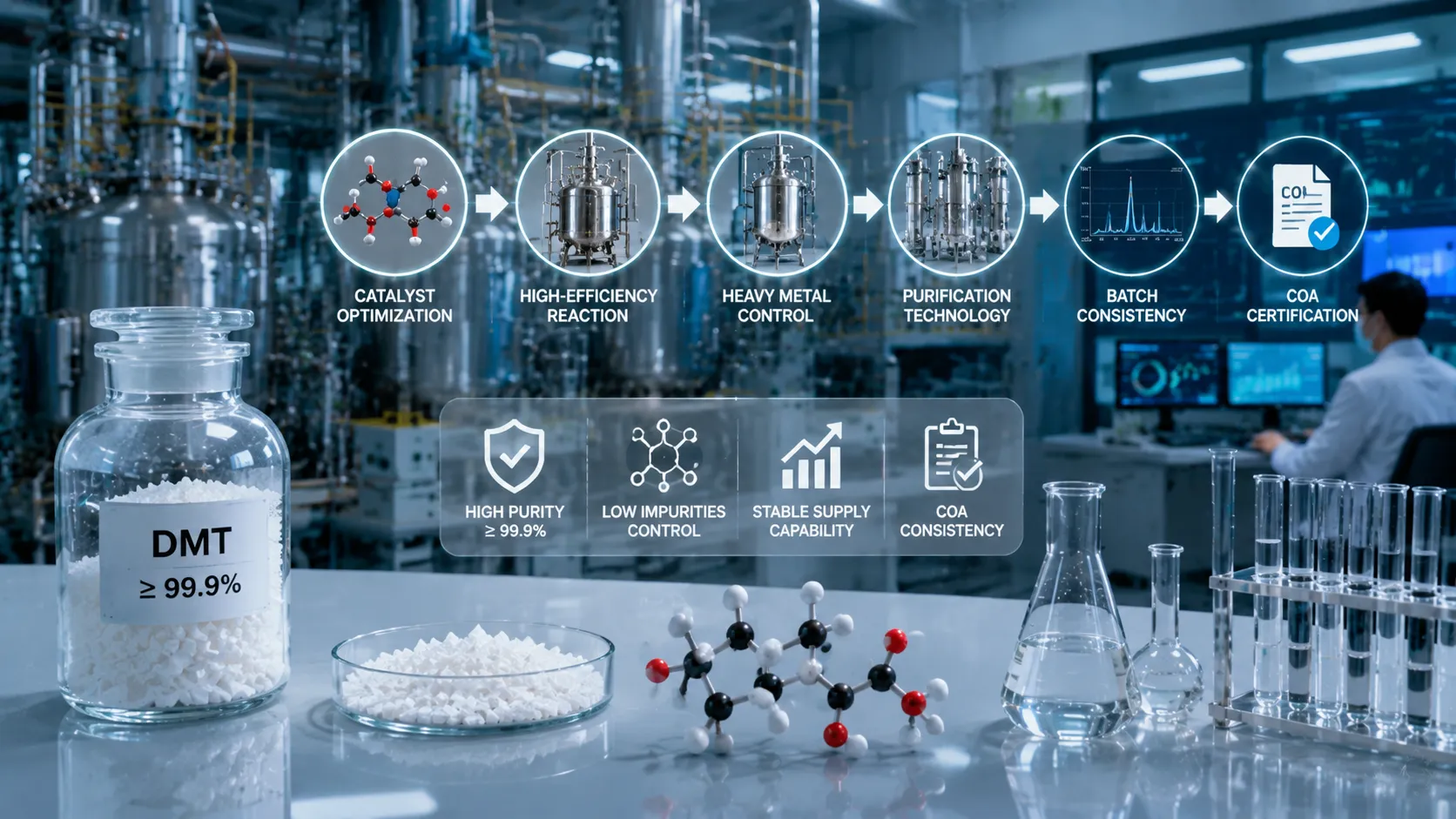
DMT Catalyst and Purification Technology: How High-Purity Dimethyl Terephthalate Is Produced at Stable Scale
This article explains catalyst systems, reaction efficiency, heavy-metal control, purification and batch stability in DMT production, showing how suppliers maintain purity ≥99.9% and consistent COA delivery.
Read more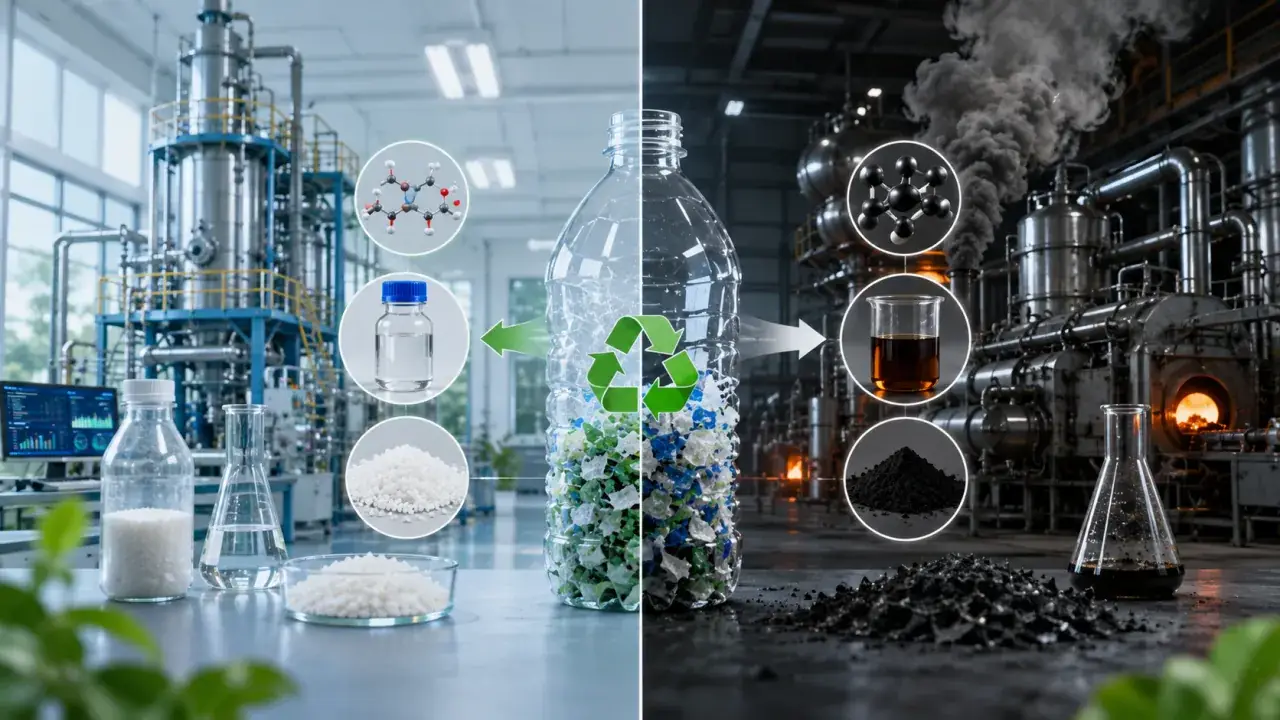 02technologyNovember 30, 2025
DMT Production Process Comparison: How Methanolysis, Esterification and Pyrolysis Routes Affect Dimethyl Terephthalate Purity
A practical comparison of DMT production routes, reaction conditions, purity, energy consumption and industrial stability, explaining why high-purity Dimethyl Terephthalate suppliers must control process quality.
Read more- 03technologyMay 21, 2026
Low-Temperature Atmospheric Methanolysis of PET to Polymer-Grade DMT: ResourceCycle's New-Quality-Productivity Process Breakthrough
ResourceCycle and the Zhejiang University Green Carbon Joint Research Center have developed a disruptive process that completes PET chemical depolymerisation at 64.5 °C atmospheric reflux — achieving 99.2% PET conversion, 99.5% DMT selectivity, 99.75% product purity, 60%+ capex reduction, 45-50% energy savings, with kiloton-per-year commercial operation.
Read more