
Complete Procurement and Technical Specification Review Guide for Dimethyl Terephthalate (CAS 120-61-6)
This article comprehensively dissects DMT physical properties, purity indicators (>99.9%), matching scenarios for three physical forms (solid flake/briquette/liquid), PBT downstream application conversion chains, and COA and MSDS supplier review mechanisms, providing systematic reference for procurement engineers.
TL;DR
- This article comprehensively dissects DMT physical properties, purity indicators (>99.9%), matching scenarios for three physical forms (solid flake/briquette/liquid), PBT downstream application conversion chains, and COA and MSDS supplier review mechanisms, providing systematic reference for procurement engineers.
- Keywords: DMT · Dimethyl Terephthalate · CAS 120-61-6 · PBT · COA
Part 1: Core Chemical Identity and Basic Technical Specifications (CAS 120-61-6)
When engineers search for materials, the first step is to use CAS 120-61-6. This is the unique "ID number" for dimethyl terephthalate in global chemical databases. Using the CAS number for searches eliminates language barriers and trade name ambiguities in cross-border procurement.
The systematic name for DMT is Dimethyl 1,4-benzene dicarboxylate. Mastering its basic chemical and physical specifications is a prerequisite for supply chain benchmarking.
Basic Physicochemical Parameters of DMT:
- Molecular Formula: C₁₀H₁₀O₄
- Molecular Weight: 194.19 g/mol
- Melting Point: 140 °C to 142 °C. This temperature range directly determines the design standards for factory heating systems.
- Boiling Point: 288 °C.
- Flash Point: 153 °C. This indicator is the core basis for factory fire safety classification.
- Solubility: DMT is insoluble in water. It is slightly soluble in diethyl ether and soluble in chloroform and hot ethanol.
When engineers search for "CAS 120-61-6 supplier," they are not merely looking for a supply channel—they are looking for a manufacturing facility that can fully meet the above Dimethyl 1,4-benzene dicarboxylate specifications. Even the slightest deviation in any parameter will lead to polymerization failure in the subsequent transesterification reactor.
Ruisaike perspective: Ruisaike specializes in high-purity Dimethyl Terephthalate (DMT, CAS 120-61-6) production through chemical process technology, with product purity of ≥99.9% for PBT engineering plastics, PET resin, PETG copolyesters and polyester-grade applications. For procurement engineers, selecting a DMT supplier requires more than CAS matching; it requires batch quality control, COA, MSDS and long-term delivery capability.
Part 2: The Lifeline of High-End Manufacturing — DMT Purity Parameter Analysis (>99.9%)
In the production of polyesters and engineering plastics, the purity of raw materials directly determines the molecular weight, color, and mechanical strength of the finished product. Therefore, "DMT purity parameter >99.9%" is a hard standard that must be met in high-end manufacturing.
Why Must Purity Reach >99.9%?
In transesterification and polycondensation reactions, trace impurities can trigger extremely severe chain reactions. The most common impurities in DMT include p-Toluic acid methyl ester, dimethyl isophthalate (DMI), and dimethyl terephthalate isomers. If impurity content exceeds 0.1%, the following problems occur:
- Chain Termination: Monofunctional impurities (such as p-Toluic acid methyl ester) can block the end groups of polymer molecules, preventing macromolecular chains from growing further. The resulting plastic becomes very brittle.
- Color Degradation: Certain specific impurities undergo carbonization or oxidation during high-temperature polymerization, causing the final polyester product to yellow. Yellowed materials cannot be used for optical-grade films or high-end textile fibers.
- Reduced Weather Resistance: Impurities remaining in the polymer lattice become weak points for UV attack, causing plastic products to age rapidly during use.
Core Technical Indicator Requirements:
- Color (Hazen / APHA): Typically required to be less than 15. The lower the value, the clearer and more transparent the color.
- Acid Value (mg KOH/g): Must be strictly controlled below 0.02. An excessively high acid value indicates the presence of free carboxyl groups, which seriously interfere with catalyst activity.
- Freezing Point (°C): Must be greater than or equal to 140.6 °C. The freezing point is the most direct macroscopic physical indicator for measuring organic purity.
Ruisaike quality focus: For high-end polyester customers, DMT purity, acid value, color, moisture and ash content are key thresholds for lab trials, pilot validation and commercial use. Ruisaike can provide samples, product specifications and batch test documents according to customer project stages.
Part 3: Physical Form and Factory Process Matching
DMT is solid at room temperature but can transform into liquid at specific temperatures. Procurement engineers search with strong form-specific keywords to match their factory's existing material conveyor belts, storage tanks, and reactor feed ports.
(1) Dimethyl Terephthalate Solid Flake
This is the most common form in international trade circulation.
Advantages and Matching Scenarios:
- Convenient for Long-Distance Shipping: Solid flakes can be packed in 25kg paper bags or 500kg/1000kg FIBC bags without requiring special insulated heating containers.
- Compatible with Conveyor Belt Feeding Systems: Most small and medium-sized downstream chemical plants are equipped with solid material conveyor belts or screw conveyors. Flake material flows well and does not easily jam.
- Dust Control: Compared to fine powder, the flake form generates minimal dust during pouring and feeding, significantly reducing the risk of dust explosions in the workshop.
(2) DMT Briquette
Briquettes are produced by physically compressing powdered or small-chip DMT into blocks of specific sizes.
Advantages and Matching Scenarios:
- Extreme Anti-Caking Requirements: In hot and humid transport environments (such as maritime shipping across the equator), small flake materials may stick together due to slight surface melting. The briquette form reduces inter-particle contact area, greatly lowering the risk of caking.
- Specific Reactor Discharge Flow Rate: Some older reactor grate designs only allow larger-volume briquettes to slowly drop and melt, controlling the initial reaction rate.
(3) Liquid DMT
This form primarily targets a small number of integrated pipeline customers.
Advantages and Matching Scenarios:
- Eliminating Secondary Heating Costs: If the supplier and buyer are in close proximity (e.g., within the same large chemical park), directly delivering liquid DMT above 150°C through insulated pipelines can save the buyer enormous steam heating costs.
- Continuous Large-Scale Production: The liquid form is extremely suitable for highly automated, round-the-clock continuous operation of giant polymerization units. Mass flow meters enable extremely precise liquid feed control with errors far smaller than solid weighing.
Procurement recommendation: DMT form selection depends on each plant's feeding system, storage conditions and transport radius. Ruisaike can help customers evaluate packaging, handling and delivery requirements and establish stable communication mechanisms for batch supply.
Part 4: Downstream Application — Polybutylene Terephthalate (PBT) Raw Material
PBT is a high-performance engineering plastic with excellent electrical insulation, chemical resistance, and fast molding characteristics. It is widely used in automotive electronic connectors, energy-saving lamp housings, and optical fiber protection tubes.
Core Conversion Chain of DMT in PBT Production:
There are two main industrial routes for PBT production: direct esterification (PTA method) and transesterification (DMT method). Since the direct esterification method requires extremely high temperatures and complex catalytic systems and easily produces by-products such as tetrahydrofuran (THF), the DMT transesterification route remains the mainstream choice for producing high-quality PBT.
- Transesterification Stage: DMT with purity >99.9% and 1,4-butanediol (BDO) undergo transesterification at 160°C - 200°C in the presence of catalysts such as tetrabutyl titanate, producing bis(hydroxybutyl) terephthalate (BHBT) and releasing methanol.
- Polycondensation Stage: As the reaction system temperature continues to rise (reaching approximately 250°C) and gradually enters high vacuum, BHBT undergoes polycondensation, with molecular chains continuously growing, ultimately forming high molecular weight PBT melt.
Since PBT is extensively used in the automotive and electronics industries where reliability requirements are extremely high, the purity and moisture requirements for the upstream raw material DMT are exceptionally stringent. Any microscopic imbalance in formulation can cause PBT injection-molded parts to crack under extreme conditions.
Relevance to Ruisaike products: Ruisaike's polyester-grade DMT can serve PBT raw material needs. For customers in new energy vehicle connectors, electronic components and high-end engineering plastics, Ruisaike can provide high-purity DMT samples, COA documentation and technical communication support to help customers reduce raw material volatility risk during the introduction phase.
Part 5: Supplier Filtering Mechanism — COA and MSDS
On professional chemical industry platforms, after buyers find suppliers through core keywords, the key conversion action is document review. COA and MSDS are the "litmus test" for verifying a supplier's true manufacturing capability and quality control system. For a DMT manufacturer like Ruisaike, providing clear, verifiable and traceable quality documentation is the foundation for engaging premium customers and long-term cooperation.
(1) In-Depth Review of COA (Certificate of Analysis)
A qualified DMT quality inspection report for high-end applications will not only indicate "qualified" but also provide detailed actual measurement data and test method references.
| Test Item | Specification | Result | Test Method |
|---|---|---|---|
| Appearance | White flaky crystals | White flaky crystals | Visual |
| Purity | ≥ 99.90% | 99.95% | Gas Chromatography (GC) |
| Acid Value | ≤ 0.02 mg KOH/g | 0.012 mg KOH/g | Titration |
| Color, Hazen | ≤ 15 | 10 | Colorimetry |
| Moisture | ≤ 0.05% | 0.02% | Karl Fischer |
| Ash Content | ≤ 0.005% | 0.002% | Ignition |
Data Review Logic:
- GC Purity is the most core indicator. Engineers will request the original gas chromatogram from suppliers. By examining impurity peaks on the chromatogram, they can infer the synthesis process used by the factory.
- Moisture Data is also a key review point. If moisture in solid flake DMT exceeds standards, hydrolysis reactions can easily occur during shipping and storage, causing the acid value to rise. Elevated acid values not only consume catalysts during polymerization but also corrode factory stainless steel equipment.
(2) MSDS (Material Safety Data Sheet) and Compliance Review
MSDS or SDS is the legal pass for chemicals to enter factory warehouses. Key MSDS review focus areas include:
- Exposure Control and Personal Protection: DMT dust or vapor causes mild irritation to eyes, skin, and respiratory tract. The MSDS will specify what level of dust masks and protective goggles must be provided.
- Physical and Chemical Hazards: Focus on flash point and explosion limits. Factory safety engineers need to calculate workshop ventilation system air change rates based on MSDS data.
- Spill Emergency Response: Since DMT is insoluble in water, it cannot be washed away with water. Dry collection must be used, and the material must be placed in dedicated sealed containers for transport to qualified hazardous waste treatment facilities.
Part 6: Global Procurement Supply Chain Technical Benchmarking Strategy
Facing numerous chemical enterprises globally, procurement engineers need rigorous logic to screen high-quality suppliers. By combining chemical entity names, physical forms, purity parameters, and core document downloads, a complete procurement funnel is formed.
- Initial Selection Based on Chemical Numbers: Use CAS 120-61-6 and Dimethyl 1,4-benzene dicarboxylate for unambiguous retrieval in professional databases, filtering out interfering options providing intermediate mixtures or similar compounds.
- Precise Matching Based on Physicochemical Properties: Based on factory workshop feeding methods, specifically search for Dimethyl Terephthalate solid flake or liquid. If the factory is located in a hot climate region, focus on searching for Briquette to prevent caking.
- Quality Filtering Based on Purity Parameters: Explicitly state DMT purity parameter >99.9% requirements, excluding low-end suppliers who only provide 99% industrial-grade materials, ensuring raw materials can directly enter the PBT production line.
- Final Confirmation Based on Document Review: Execute Certificate of Analysis download on supplier websites. By comparing gas chromatography data, acid values, and moisture, verify the batch quality stability of the supplier. Simultaneously, collect the latest MSDS files and submit them to the factory safety and environmental department for final pre-warehousing approval.
Ruisaike procurement path: For customers requiring high-purity DMT, polyester-grade DMT or PBT raw material DMT, we recommend first submitting the target application, annual volume, packaging method and quality specifications. Ruisaike can provide samples, COA/MSDS documentation, batch supply communication and long-term framework cooperation based on customer needs.

Related articles
 01technologyOctober 18, 2025
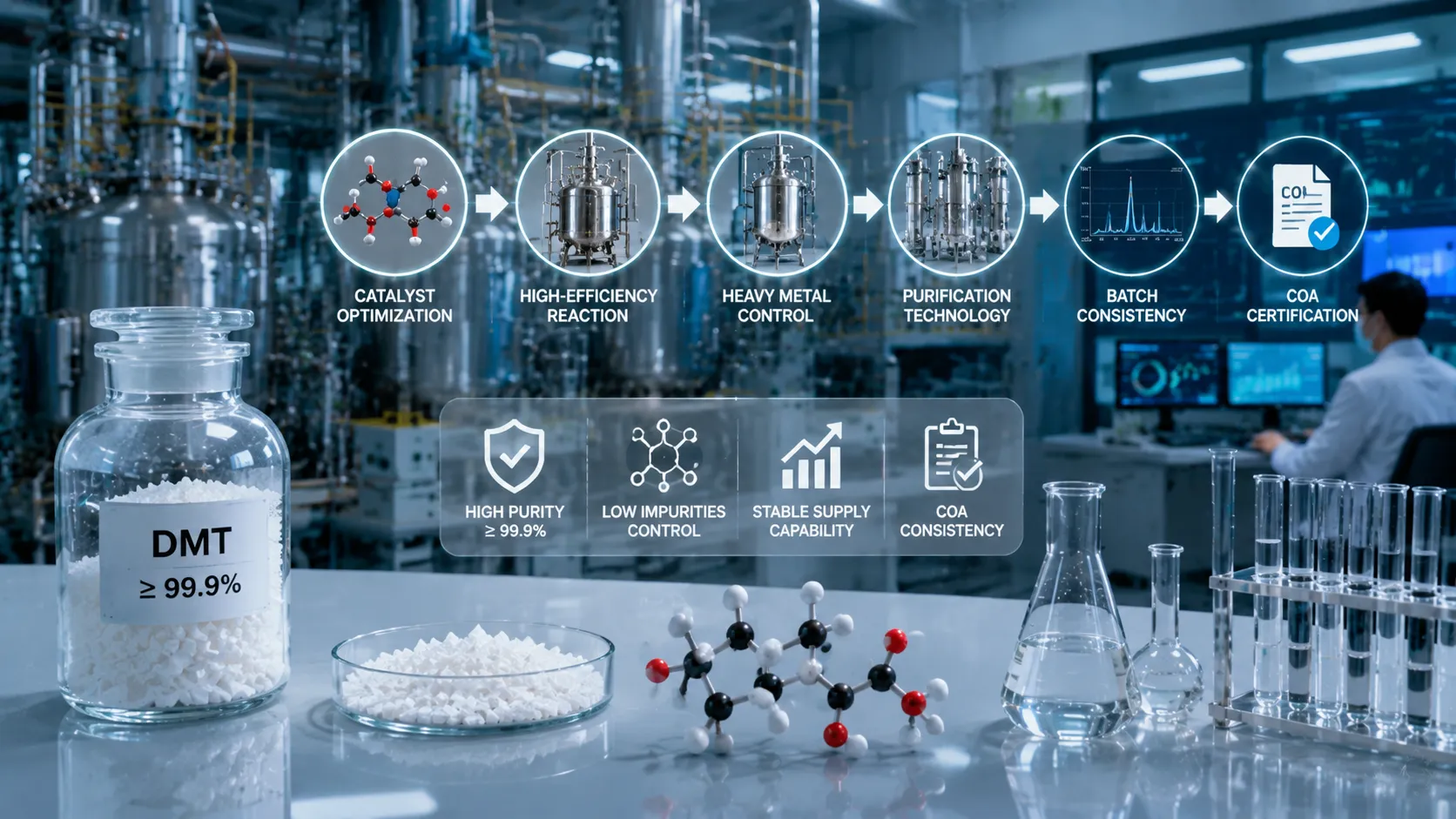
DMT Catalyst and Purification Technology: How High-Purity Dimethyl Terephthalate Is Produced at Stable Scale
This article explains catalyst systems, reaction efficiency, heavy-metal control, purification and batch stability in DMT production, showing how suppliers maintain purity ≥99.9% and consistent COA delivery.
Read more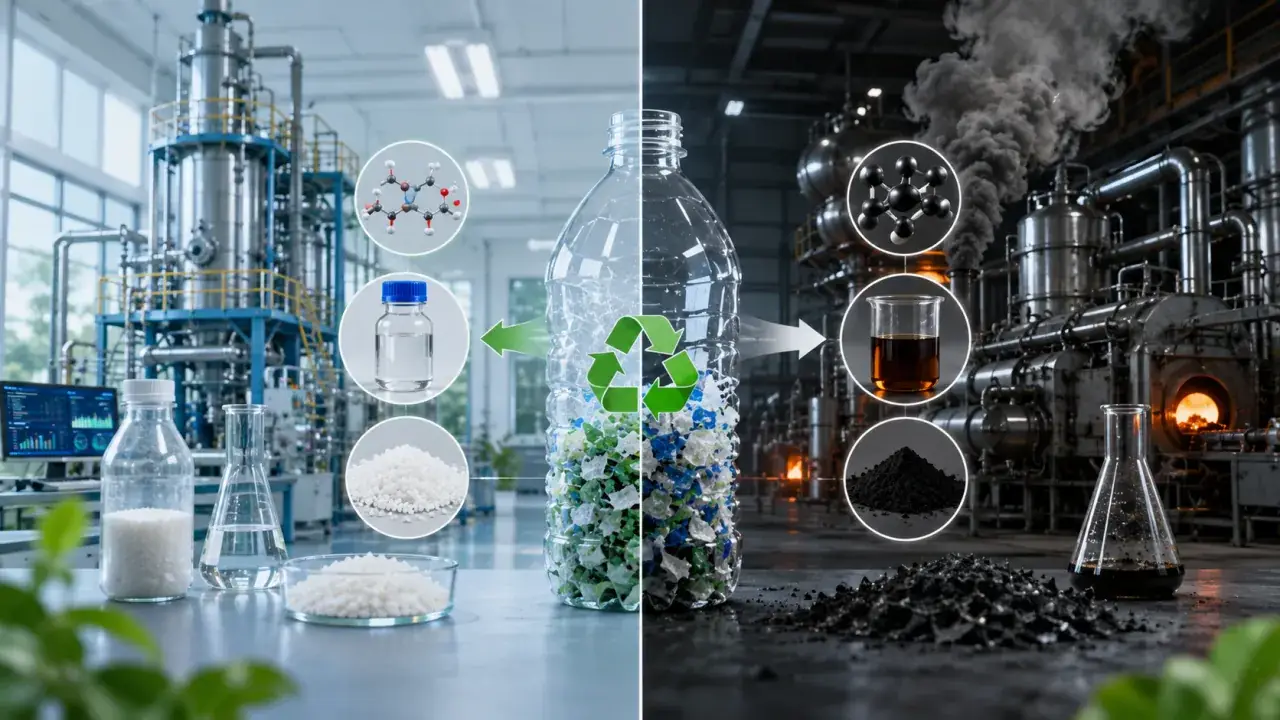 02technologyNovember 30, 2025
DMT Production Process Comparison: How Methanolysis, Esterification and Pyrolysis Routes Affect Dimethyl Terephthalate Purity
A practical comparison of DMT production routes, reaction conditions, purity, energy consumption and industrial stability, explaining why high-purity Dimethyl Terephthalate suppliers must control process quality.
Read more 03technologyMay 21, 2026
Low-Temperature Atmospheric Methanolysis of PET to Polymer-Grade DMT: ResourceCycle's New-Quality-Productivity Process Breakthrough
ResourceCycle and the Zhejiang University Green Carbon Joint Research Center have developed a disruptive process that completes PET chemical depolymerisation at 64.5 °C atmospheric reflux — achieving 99.2% PET conversion, 99.5% DMT selectivity, 99.75% product purity, 60%+ capex reduction, 45-50% energy savings, with kiloton-per-year commercial operation.
Read more