
DMT and Ethylene Glycol Co-Supply: How Dimethyl Terephthalate Manufacturers Serve the Polyester Value Chain
ResourceCycle's 5,000-ton/year DMT and 1,600-ton/year Ethylene Glycol (EG) supply capability supports PBT, PET, polyester fiber, antifreeze and resin customers evaluating integrated raw material suppliers.
TL;DR
- ResourceCycle's 5,000-ton/year DMT and 1,600-ton/year Ethylene Glycol (EG) supply capability supports PBT, PET, polyester fiber, antifreeze and resin customers evaluating integrated raw material suppliers.
- Keywords: ethylene glycol co-production DMT · DMT and EG supply · Dimethyl Terephthalate manufacturer · high-purity DMT · polyester-grade DMT
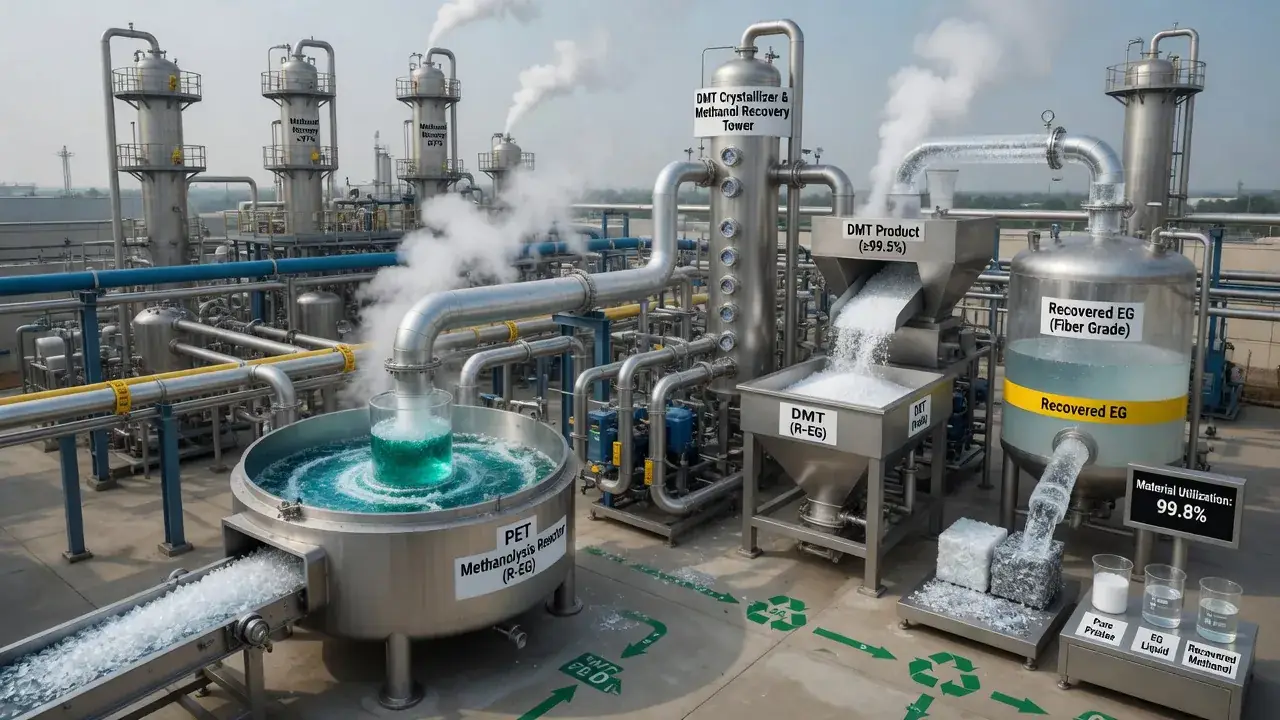
Waste PET chemical recycling is not just about recovering DMT — the complete methanolysis route also produces large amounts of ethylene glycol (EG) as a co-product. Taking ResourceCycle's Huanggang project as an example, while recovering 5,000 tons of R-DMT annually, it also co-produces 1,600 tons of high-purity recycled ethylene glycol (R-EG), achieving full-component value utilization of waste materials.
Chemical Equation for PET Methanolysis PET + 2CH₃OH → DMT + EG (methanolysis) Each ton of PET methanolysis can theoretically yield approximately 0.86 tons of DMT and 0.31 tons of EG, with a material utilization rate approaching 100%, far superior to the 40-60% of pyrolysis routes.
R-EG Product Specifications and Market R-EG produced by ResourceCycle has a purity ≥99.8%, meeting the superior grade standard of GB/T 4649-2018 "Industrial Ethylene Glycol". Main downstream applications of R-EG include: antifreeze, polyester polymerization raw materials (re-synthesizing PET), unsaturated polyester resins, vinyl ester coatings, etc. Market acceptance of R-EG is growing, with mainstream prices in the East China region between 4,500-5,500 yuan/ton, narrowing the price gap with petrochemical EG and significantly improving competitiveness.
Methanol Recovery and Recycling Methanol consumed in the methanolysis process is separated and recovered through distillation towers, with recovery rate ≥97%, recycled back to methanolysis reactors, significantly reducing raw material consumption costs. Small amounts of methanol tail gas that cannot be recovered are treated by combustion, meeting the secondary requirements of GB 16297-1996 "Comprehensive Emission Standard of Air Pollutants".
Zero Waste Target In addition to DMT and EG main products, impurities such as PET labels and bottle caps separated during pre-treatment are handled separately: recyclable plastics are handed to professional recyclers, and non-recyclable portions are sent to cement kilns for co-disposal, achieving zero landfill of solid waste. All wastewater in the entire process is treated to standard through three stages and recycled for use, with wastewater discharge reduced by 85% compared to traditional processes.

Related articles
 01technologyOctober 18, 2025
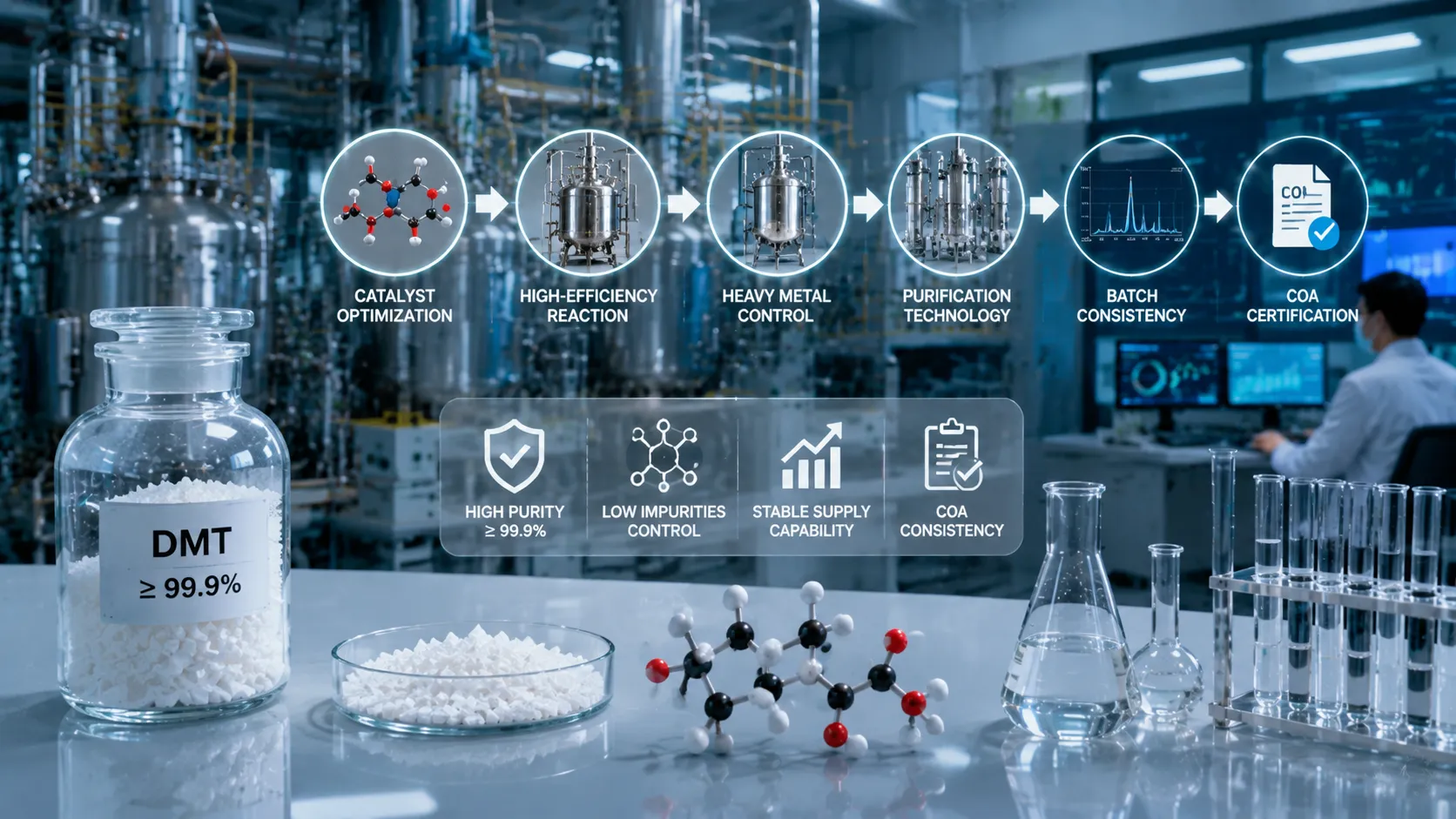
DMT Catalyst and Purification Technology: How High-Purity Dimethyl Terephthalate Is Produced at Stable Scale
This article explains catalyst systems, reaction efficiency, heavy-metal control, purification and batch stability in DMT production, showing how suppliers maintain purity ≥99.9% and consistent COA delivery.
Read more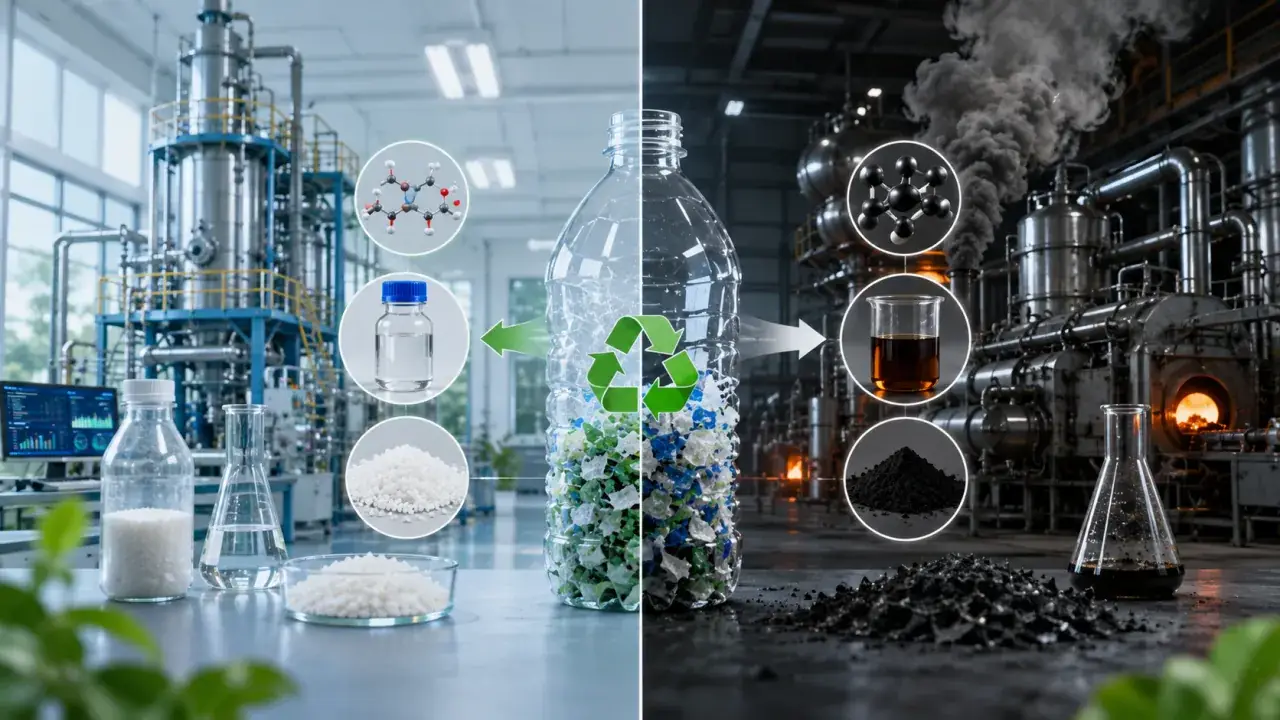 02technologyNovember 30, 2025
DMT Production Process Comparison: How Methanolysis, Esterification and Pyrolysis Routes Affect Dimethyl Terephthalate Purity
A practical comparison of DMT production routes, reaction conditions, purity, energy consumption and industrial stability, explaining why high-purity Dimethyl Terephthalate suppliers must control process quality.
Read more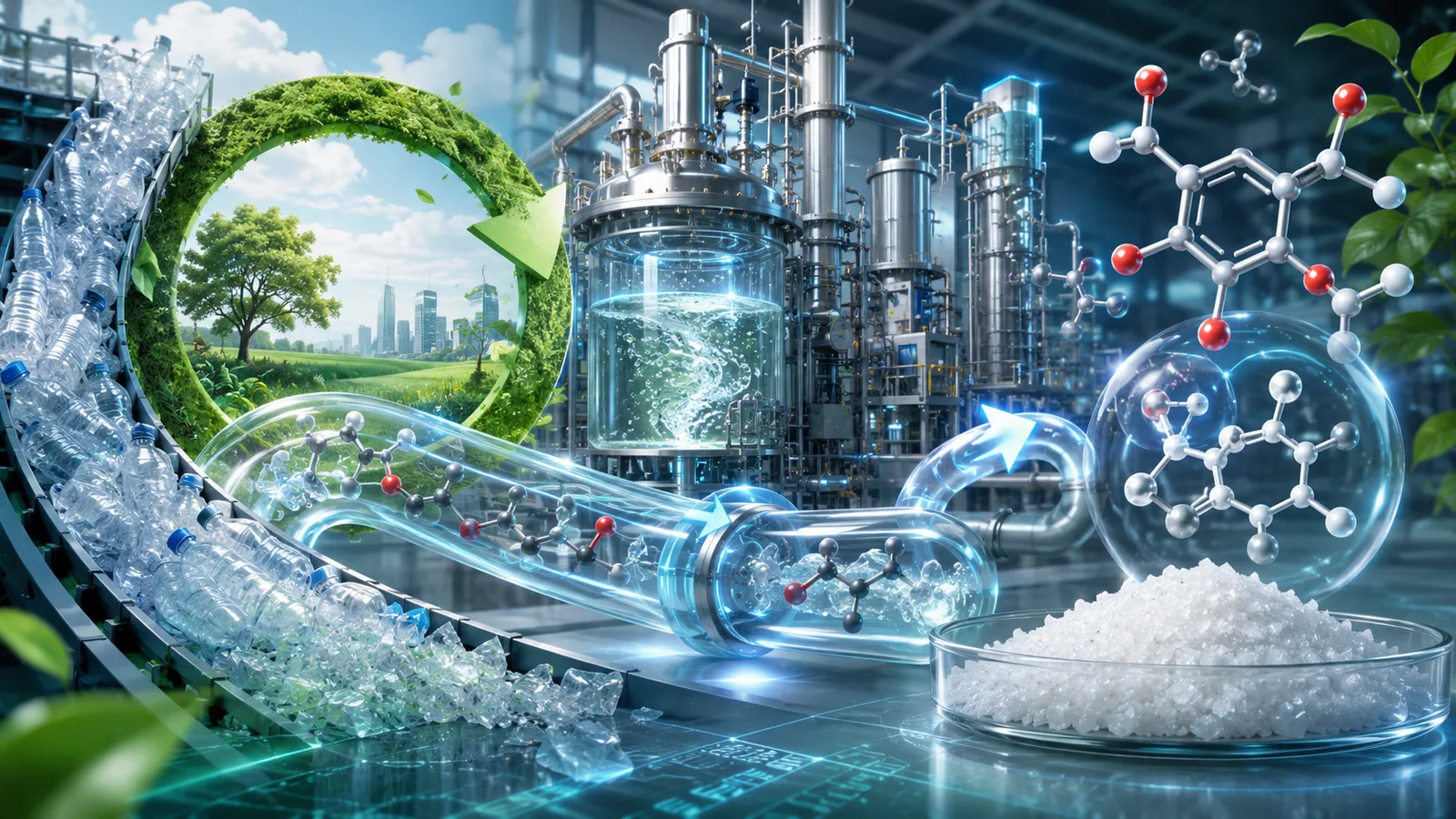 03technologyMay 21, 2026
Low-Temperature Atmospheric Methanolysis of PET to Polymer-Grade DMT: ResourceCycle's New-Quality-Productivity Process Breakthrough
ResourceCycle and the Zhejiang University Green Carbon Joint Research Center have developed a disruptive process that completes PET chemical depolymerisation at 64.5 °C atmospheric reflux — achieving 99.2% PET conversion, 99.5% DMT selectivity, 99.75% product purity, 60%+ capex reduction, 45-50% energy savings, with kiloton-per-year commercial operation.
Read more