
Low-Carbon DMT Carbon Footprint: How Polyester-Grade Dimethyl Terephthalate Supply Chains Reduce Scope 3 Emissions
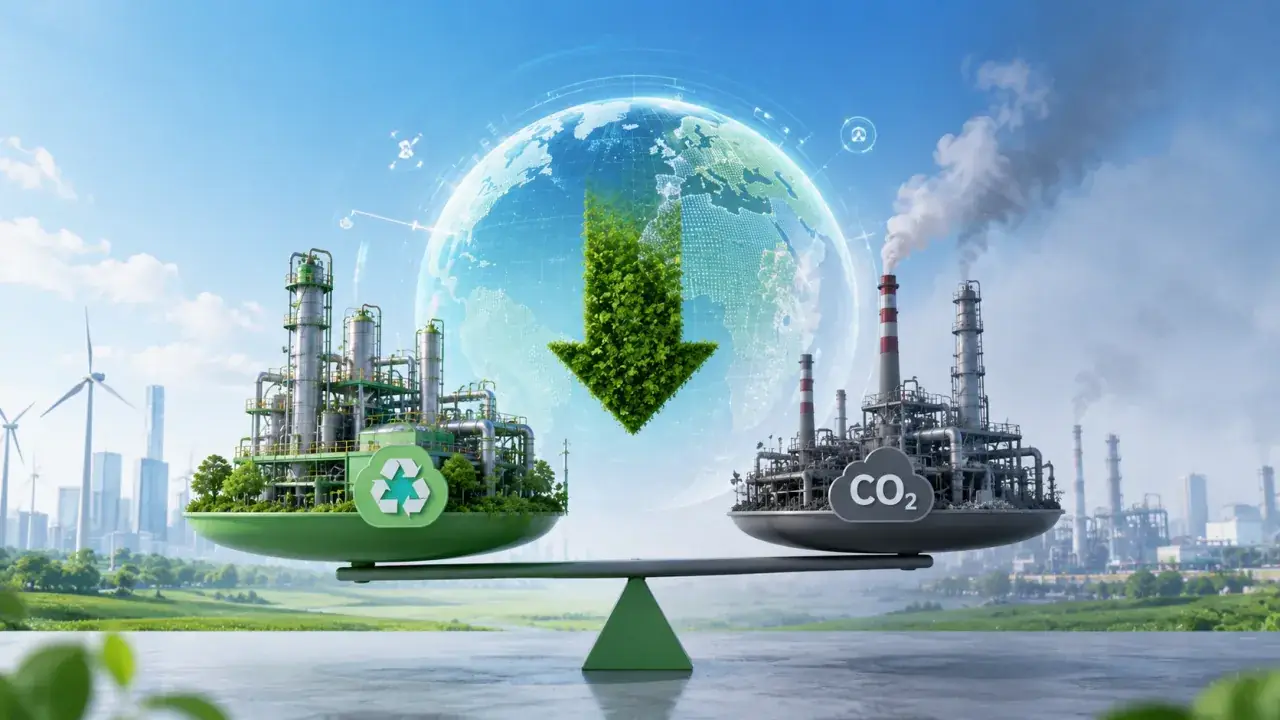
Using ISO 14067 and LCA principles, this article explains how polyester-grade DMT suppliers can manage carbon footprint across raw materials, production, energy and logistics for PBT, PET and PETG customers.
TL;DR
- Using ISO 14067 and LCA principles, this article explains how polyester-grade DMT suppliers can manage carbon footprint across raw materials, production, energy and logistics for PBT, PET and PETG customers.
- Keywords: Low-carbon DMT · DMT carbon footprint · ISO 14067 · LCA · Scope 3 emissions
Why DMT buyers are paying attention to carbon footprint
As global brands strengthen ESG disclosure, product carbon footprint and Scope 3 supply-chain emission management, downstream PBT, PET, PETG, coating resin and polyester fiber customers are no longer evaluating DMT only by price, purity and delivery time. They increasingly expect suppliers to provide transparent low-carbon data.
Dimethyl Terephthalate (DMT, CAS 120-61-6) is an important polyester monomer. Its carbon footprint can affect the green evaluation of downstream materials in automotive, electronics, packaging and export-oriented supply chains.
ISO 14067 and LCA: how DMT carbon footprint can be assessed
ISO 14067 uses Life Cycle Assessment (LCA) principles to quantify product carbon footprint. For DMT, a practical boundary is usually cradle-to-gate, covering emissions from raw materials to the finished product leaving the plant.
Key factors to include
- Raw materials: methanol, terephthalate-related intermediates and upstream emission factors.
- Production: energy consumption in esterification, distillation, crystallization and drying.
- Quality control: purity, color, acid value and batch stability.
- Packaging and logistics: bulk bags, pallets, tankers, port routes and delivery distance.
- Documentation: COA, MSDS, batch traceability, energy records and third-party carbon reports.
Three ways to improve low-carbon DMT supply
1. Stable production reduces unit energy consumption
Carbon footprint is influenced by process continuity, equipment efficiency and first-pass product yield. Stable high-purity DMT production reduces rework and unnecessary energy consumption.
2. Energy structure changes carbon intensity
Electricity mix, steam source and plant energy management directly affect the carbon intensity of each ton of DMT. Buyers should ask suppliers about power use, steam consumption and emission-factor sources.
3. Localized delivery reduces logistics emissions
DMT is a bulk chemical raw material. Transport distance, packaging and inventory turnover all influence the total supply-chain footprint.
ResourceCycle perspective
Low-carbon DMT is not just a marketing label. It requires stable batches, quality documents, traceability and practical delivery capability. ResourceCycle focuses on high-purity Dimethyl Terephthalate (DMT) and Ethylene Glycol (EG) supply, and can support customers with DMT samples, COA/MSDS, bulk quotations and customized supply discussions.
Related articles
- 01marketSeptember 15, 2025
Low-Carbon DMT Carbon Footprint: How Polyester-Grade Dimethyl Terephthalate Supply Chains Reduce Scope 3 Emissions
Using ISO 14067 and LCA principles, this article explains how polyester-grade DMT suppliers can manage carbon footprint across raw materials, production, energy and logistics for PBT, PET and PETG customers.
Read more 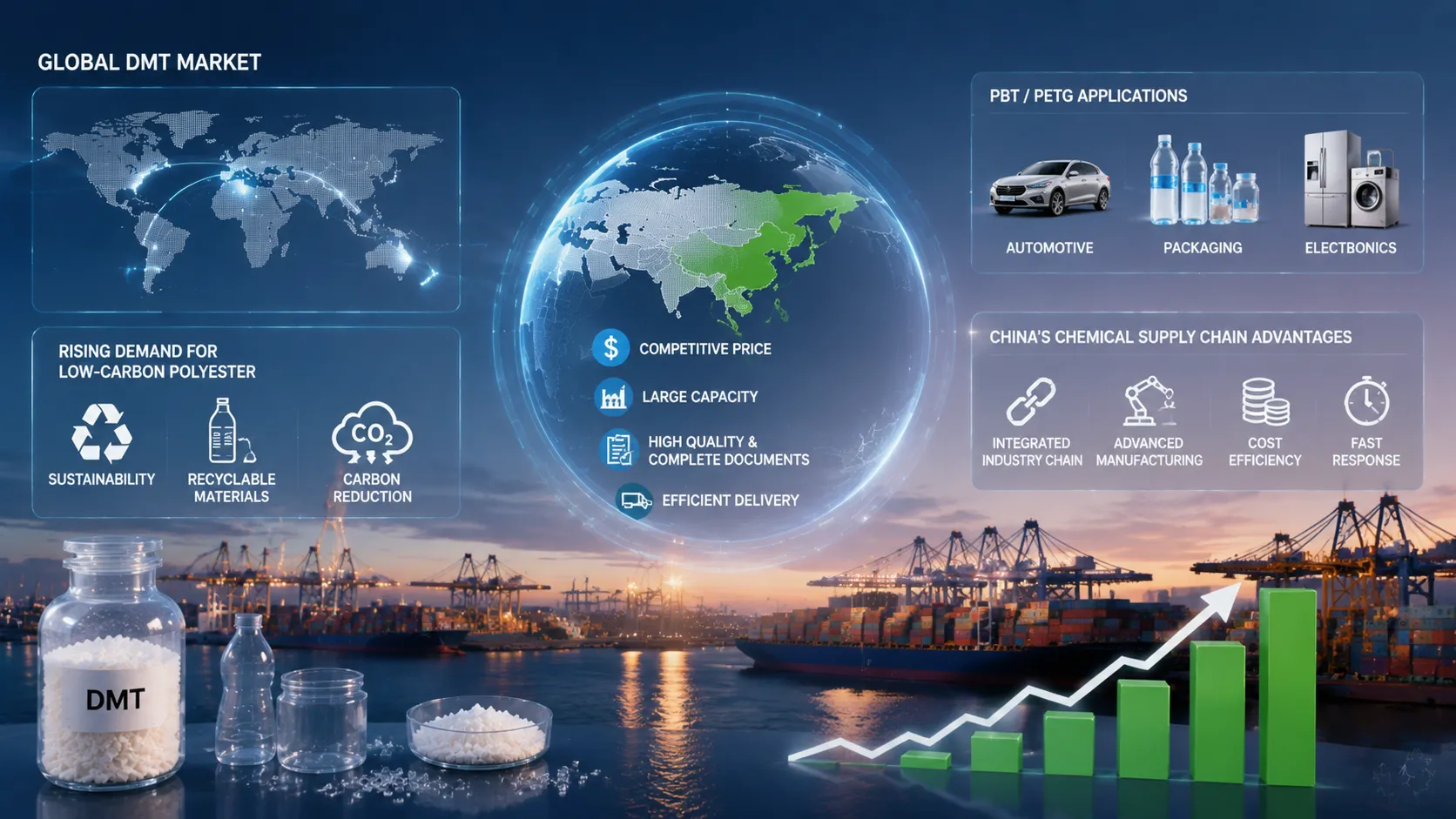 02marketMay 8, 2025
Global DMT and Low-Carbon Polyester Raw Material Competition: Opportunities for Chinese Dimethyl Terephthalate Suppliers
Analyzing global DMT, low-carbon polyester raw materials, PBT/PETG applications and China's chemical supply-chain advantages in price, capacity, quality documents and delivery efficiency.
Read more 03marketMay 11, 2026
2026 Global Supply Chain Reshaping: DMT Market Outlook, Price Trends & China Sourcing Strategy
An in-depth analysis of the 2026 DMT global supply-demand landscape transformation — from macro market outlook, PX-DMT cost transmission mechanisms, and PTA substitution dynamics to China's integrated advantages and low-cost sourcing strategies, providing supply chain executives with a strategic and actionable intelligence guide.
Read more