
ESG Value of DMT Supply Chains: How Low-Carbon Dimethyl Terephthalate Supports Scope 3 Disclosure
From Scope 3 accounting, product carbon footprint, COA/MSDS, batch traceability and green supply-chain audits, learn how low-carbon DMT suppliers support ESG disclosure for PBT, PET and PETG customers.
TL;DR
- From Scope 3 accounting, product carbon footprint, COA/MSDS, batch traceability and green supply-chain audits, learn how low-carbon DMT suppliers support ESG disclosure for PBT, PET and PETG customers.
- Keywords: DMT ESG · low-carbon DMT · Scope 3 · DMT carbon footprint · green supply chain
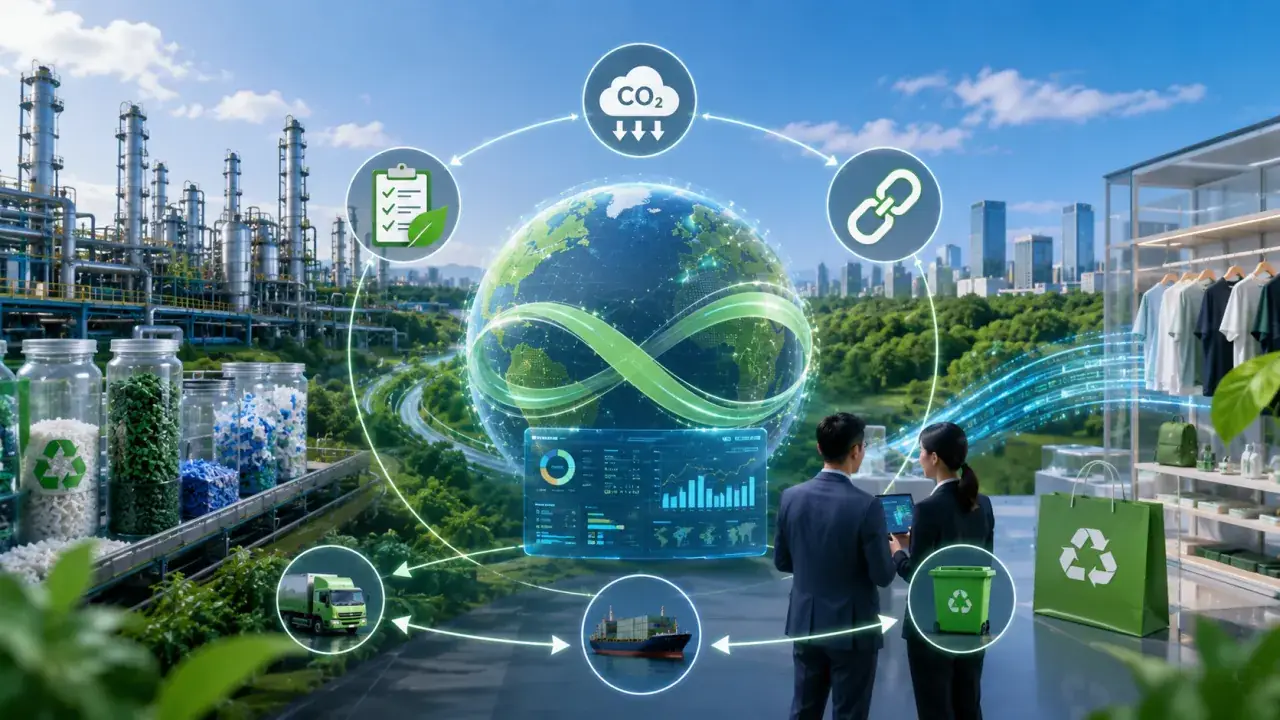
In the global ESG (Environmental, Social, and Governance) wave, brand owners, retailers, and manufacturers face increasingly strong supply chain carbon reduction pressure. The successive implementation of the Plastics Treaty, EU Packaging and Packaging Waste Regulation (PPWR), and China's Extended Producer Responsibility policy has made the use of recycled materials no longer just a "moral choice" but a hard compliance requirement and market access threshold.
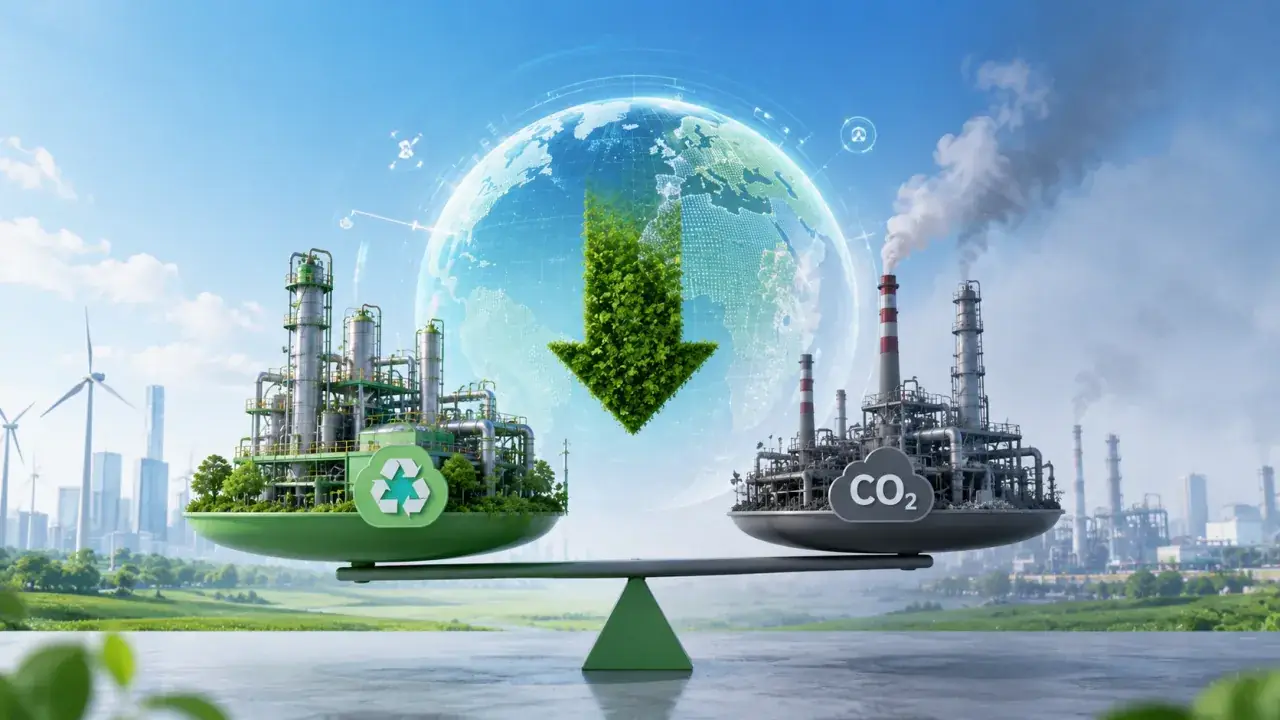
Three Dimensions of Quantifiable Green Value First dimension — Carbon reduction: As shown in the LCA data above, using 1 ton of R-DMT to replace petrochemical DMT can reduce approximately 1.63 tons of CO₂ emissions. Customers can include this reduction in Scope 3 emission accounting (upstream supplier emissions), directly contributing to SBTi (Science Based Targets initiative) reduction pathways.
Second dimension — Recycled material ratio: EU PPWR requires PET beverage bottles to contain 30% recycled materials by 2030 and increase to 65% by 2040. PET produced from R-DMT fully meets the "chemical recycling" identification standard. Brand owners using it can report recycled material usage ratios to regulatory agencies, avoiding compliance fines.
Third dimension — Supply chain transparency: ResourceCycle provides customers with Chain of Custody certification, proving that raw materials come from waste plastic chemical recycling rather than virgin petrochemical materials. This certificate can be used for GRI 306 (Waste Management), CDP supply chain questionnaire, and other ESG report disclosures.
Building ESG Data Platforms with Customers ResourceCycle is developing a digital carbon tracking platform where customers can view real-time carbon footprint data, waste source certification, and carbon reduction accounting reports for each batch of R-DMT, achieving full-chain carbon data traceability from waste plastic collection to downstream products.
Rather than saying chemical recycling is a "waste recycling" business, it is better described as a systematic project of "green value creation". ResourceCycle is willing to work with like-minded partners to build a sustainable green supply chain ecosystem.
Related articles
 01marketSeptember 15, 2025
Low-Carbon DMT Carbon Footprint: How Polyester-Grade Dimethyl Terephthalate Supply Chains Reduce Scope 3 Emissions
Using ISO 14067 and LCA principles, this article explains how polyester-grade DMT suppliers can manage carbon footprint across raw materials, production, energy and logistics for PBT, PET and PETG customers.
Read more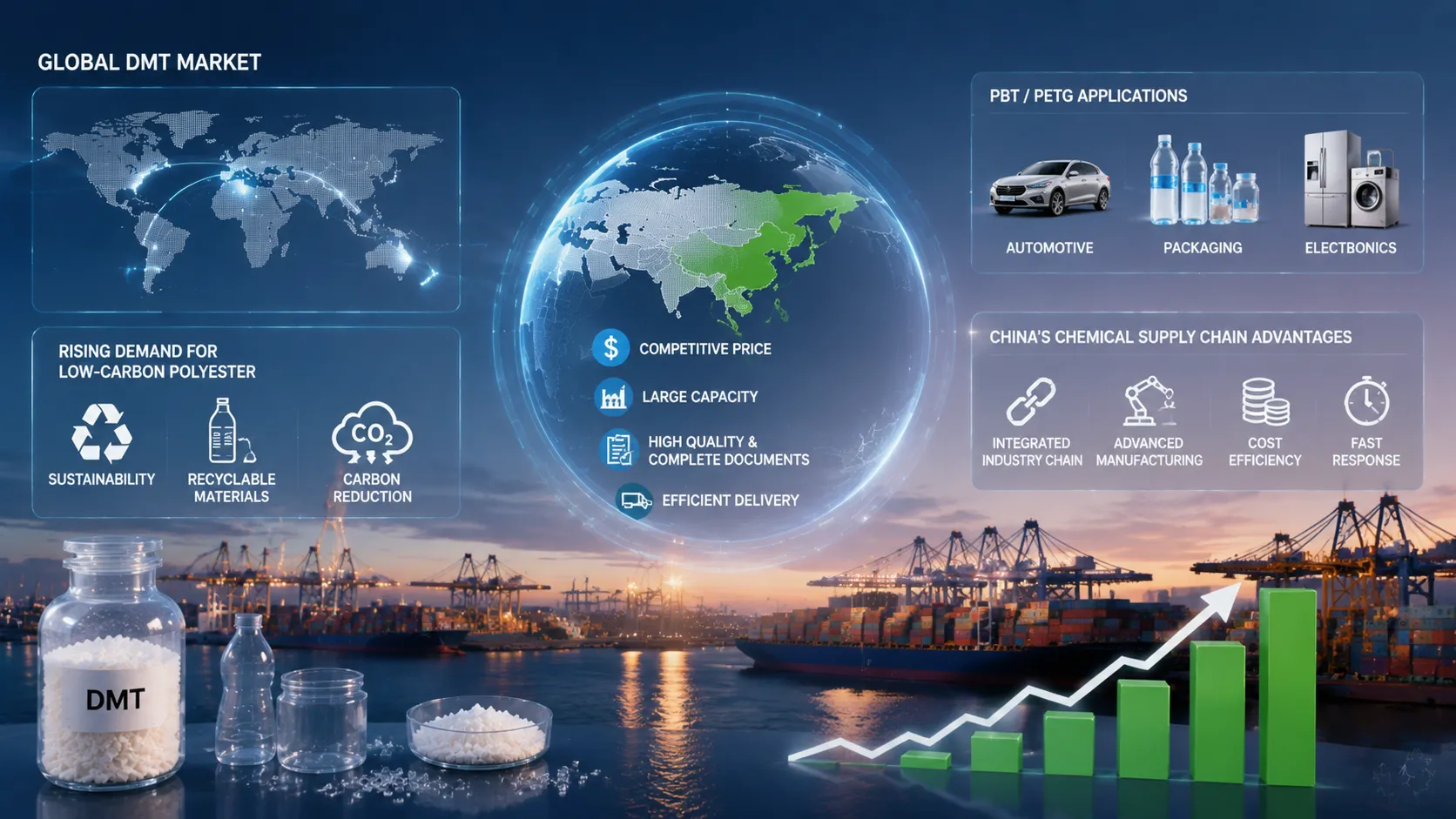 02marketMay 8, 2025
Global DMT and Low-Carbon Polyester Raw Material Competition: Opportunities for Chinese Dimethyl Terephthalate Suppliers
Analyzing global DMT, low-carbon polyester raw materials, PBT/PETG applications and China's chemical supply-chain advantages in price, capacity, quality documents and delivery efficiency.
Read more 03marketMay 11, 2026
2026 Global Supply Chain Reshaping: DMT Market Outlook, Price Trends & China Sourcing Strategy
An in-depth analysis of the 2026 DMT global supply-demand landscape transformation — from macro market outlook, PX-DMT cost transmission mechanisms, and PTA substitution dynamics to China's integrated advantages and low-cost sourcing strategies, providing supply chain executives with a strategic and actionable intelligence guide.
Read more